


How to Find a Reliable Roof Repair Solution Quickly
Recognizing Early Damage Signs and Knowing When to Act
To find a reliable roof repair solution quickly, assess visible damage from the ground and attic, schedule emergency tarping if active interior leaks are present, and hire a licensed local contractor with proven manufacturer certifications and workmanship warranties. Acting promptly isolates roof vulnerabilities before minor leaks escalate into widespread structural damage.
Identifying roof problems early saves thousands of dollars in structural restoration. Most roofing failures do not begin with a catastrophic collapse; they start as tiny vulnerabilities that slowly admit moisture into your home. When moisture penetrates past the outer covering, it quickly compromises the underlayment, rots the wooden decking, saturates attic insulation, and fosters dangerous mold colonies.
Routine visual checks—especially after severe windstorms or heavy winter freezes—can reveal surface-level wear before water drips through your ceiling. Look closely for:
Granule Loss: Finding heavy accumulations of mineral granules in your gutters is a classic indicator that asphalt shingles are drying out, leaving the underlying asphalt layer exposed to harsh UV degradation.
Missing or Dislodged Shingles: High wind gusts can break the adhesive seal beneath shingles, peeling them off and exposing raw wooden decking.
Attic Mold and Moisture Stains: A musty smell in your attic or dark discoloration along the rafters indicates hidden moisture intrusion long before interior drywall fails.
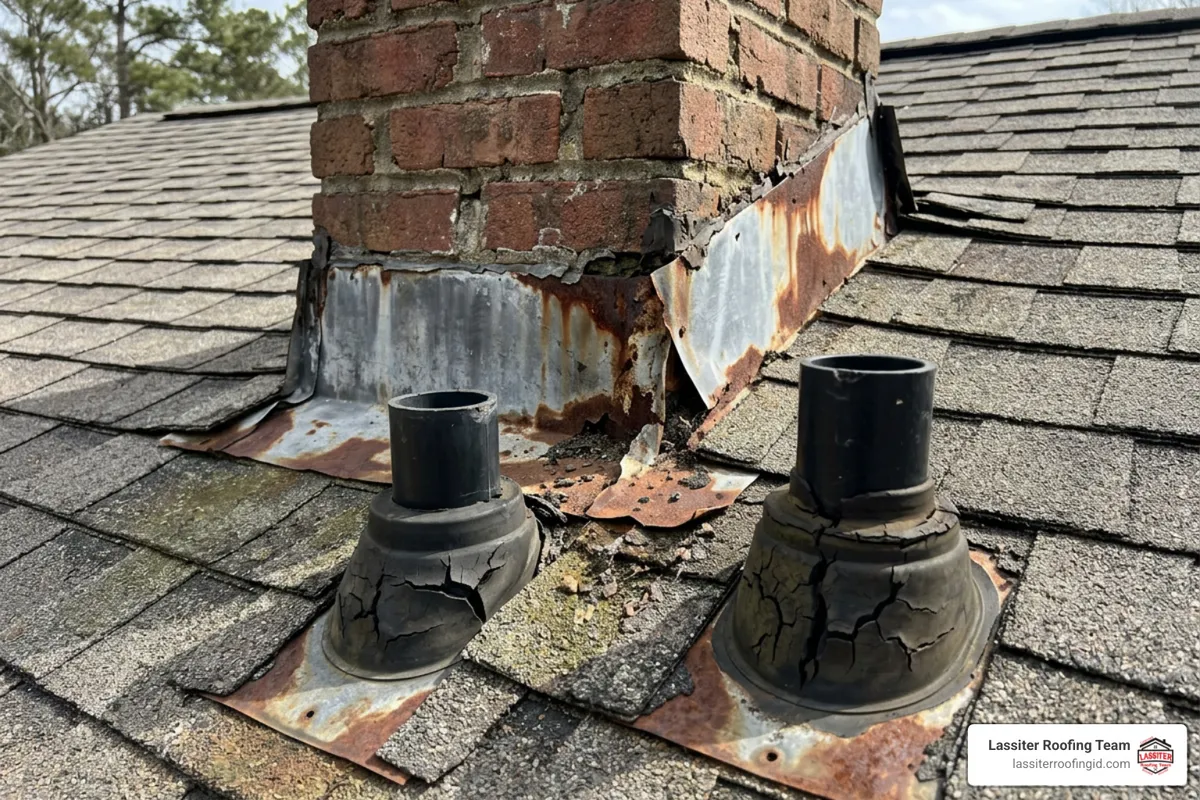
Compromised Penetrations: Standard rubber gaskets on pipe collars degrade in direct sunlight, frequently cracking within 8 to 12 years of exposure.
Urgent Warning Signs Requiring Immediate Action
Certain conditions indicate active, acute failure and demand immediate professional intervention. If you spot any of the following critical warning signs, contact a qualified contractor right away:
Visible Daylight in the Attic: If sunlight shines through your roof decking or roof-to-wall transitions, water will enter freely during the next rainstorm.
Sagging Roofline or Spongy Decking: A dipping roof plane or soft spots underfoot signal severe structural moisture damage or compromised roof trusses.
Brown Water Stains and Peeling Paint: Dark rings spreading across your ceiling drywall or peeling paint along interior walls mean water has traveled through your framing.
Damaged Soffits and Fascia: Water that backs up due to clogged gutters or failed edges often rots the exterior eaves and fascia boards, weakening structural roof anchors.
Active Interior Drips: Water penetrating living spaces is a direct emergency that requires quick leak containment to prevent severe electrical hazards and drywall collapse.
Roof Repair vs. Full Replacement: The 25% Rule and Useful Life
A major question homeowners face is deciding whether to patch a damaged area or invest in a full teardown. Knowing your system's age and overall condition helps you make a financially sound decision.
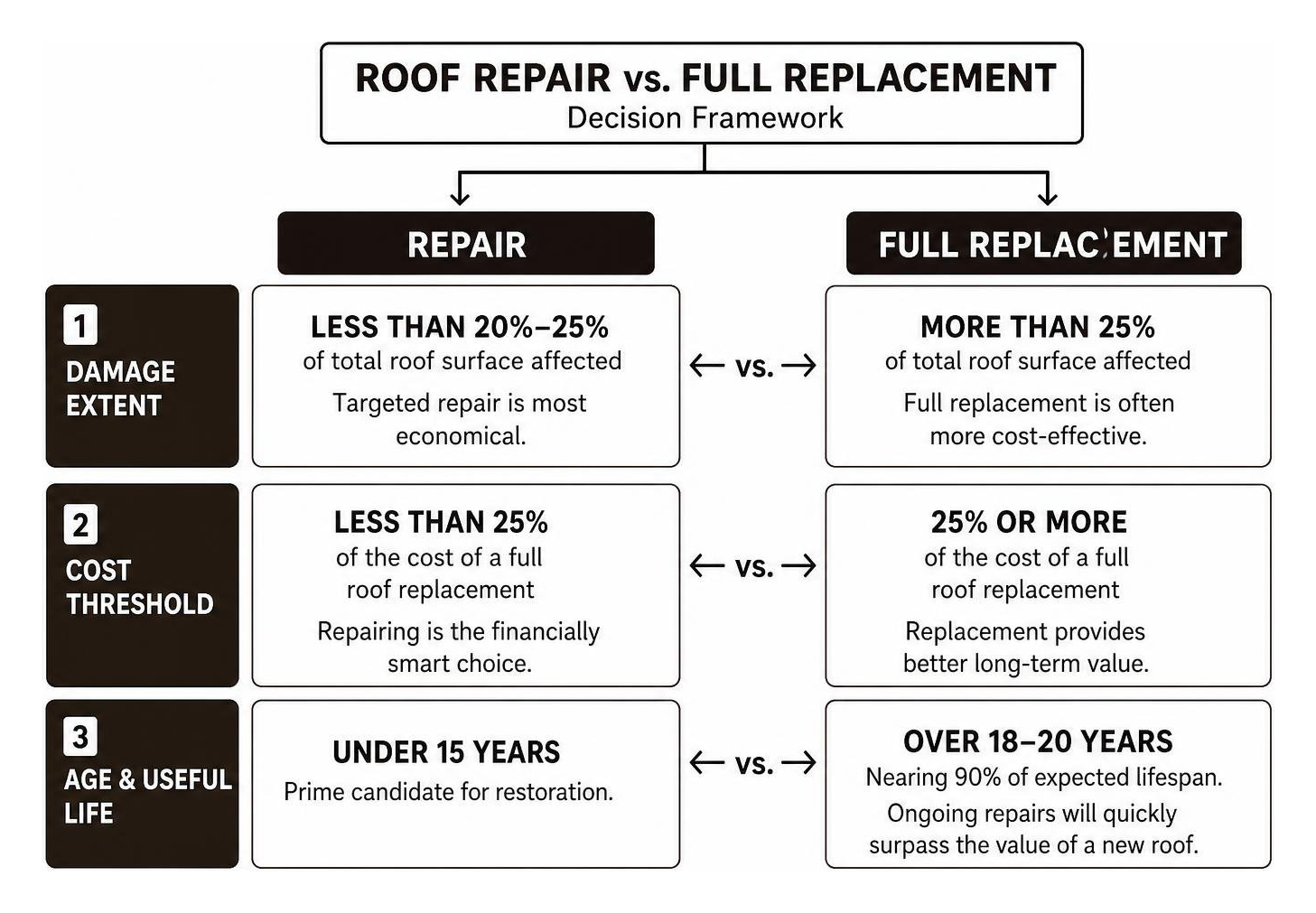
Industry professionals rely on clear operational benchmarks to determine when a repair is appropriate:
The 25% Damage Rule: If localized damage affects less than 20% to 25% of the total roof surface, a targeted repair is generally the most economical solution. If severe storm damage or pervasive rot exceeds 25% of the surface area, a full replacement is often more cost-effective.
The 25% Cost Threshold: If the estimated cost of repairs is under 25% of the price of a full roof replacement, repairing the structure is the financially smart choice.
Roof Age and Material Life: An asphalt shingle roof has an average life expectancy of 15 to 30 years (with basic three-tab designs lasting around 20 years and architectural styles reaching 30 years). Roofs under 15 years old are prime candidates for restoration. Conversely, if your asphalt roof is over 18 to 20 years old and nearing 90% of its expected lifespan, ongoing repair costs will quickly surpass the value of a new roof.
Underlayment and Shielding: When localized repairs require lifting shingles down to the deck, installing durable protective materials like self-adhering Ice and Water Shield along vulnerable eaves and valleys ensures watertight protection against ice dams and wind-driven rain.
Comprehensive Roof Repair Cost Breakdown and Pricing Factors
Understanding repair pricing allows you to budget effectively and evaluate contractor bids with confidence. Nationwide, residential repair costs generally range between $395 and $1,966, with the typical homeowner spending an average of $1,173. Depending on the complexity and scope of the damage, projects can scale from simple $150 minor fixes up to $8,000 for extensive structural restorations.
Standard hourly labor rates for experienced roofing contractors range from $45 to $75 per hour. For complex, steep-slope, or multi-story structures, specialized safety rigging and labor adjustments will influence final estimates.
Repair Category / Material | Typical Cost Range | Common Scope of Work |
|---|---|---|
Minor Repair | $300 – $700 | Single leak fix, isolated shingle replacement, small boot seal |
Standard Repair | $500 – $1,500 | Multiple shingle bundles, flashing resealing, pipe boot replacement |
Major Structural Repair | $1,500 – $5,000 | Valley reconstruction, multiple penetrations, rotted decking repair |
Flat / Single-Ply Roofs | $400 – $1,200 | Seam re-welding, puncture patching, elastomeric coating |
Asphalt Shingle Repairs | $350 – $975 | Wind-torn shingle swaps, valley sealing, step-flashing resets |
Tile Roof Repair | $800 – $1,500 | Mortar repointing, cracked tile replacements, underlayment patches |
Metal Roof Repair | $800 – $2,200 | Fastener replacements, standing seam resealing, panel patching |
Slate Roof Repair | $800 – $3,200 | Custom slate matching, copper flashing fabrication, hook resets |
Common Roof Repair Types and Vulnerable Areas
Most roof leaks do not originate in the open shingle field. Instead, water finds its way into intersections, penetrations, and joints. Addressing these high-stress areas prevents broader water damage:
Flashing Failures: Metal transitions around walls, dormers, and vertical brick joints require specialized metal trim. Precise Cap Flashing Installation is essential along masonry walls and parapets to stop water from running behind the exterior building envelope.
Pipe Boots and Vent Collars: Extreme weather causes the neoprene rubber collars around plumbing vent pipes to oxidize and crack. Upgrading to high-durability pipe collars prevents recurring attic leaks.
Chimney Seals and Valleys: Chimneys channel significant amounts of runoff down roof slopes. Deteriorated counter-flashing or cracked chimney crickets can direct gallons of water straight behind your interior framing.
Gutter Backflow: Overflowing gutters allow water to back up underneath the eave edge. Professional gutter repairs average $240 to $480 and protect your underlying rafters from rot.
Material-Specific Costs and Square Footage Variables
Repair pricing is also shaped by surface area and the specific material installed on your home:
100 sq. ft. area: $350 – $1,200
200 sq. ft. area: $700 – $2,400
500 sq. ft. area: $1,750 – $6,000
1,000 sq. ft. area: $3,500 – $12,000
Different materials involve unique installation methods. For instance, addressing rust, failed neoprene fasteners, and loose seams through specialized Corrugated Metal Roof Repair demands metal-grade sealants and mechanical closures. Similarly, delicate tile systems require targeted work, such as specialized Cracked Roof Tile Repair or a complete plan to Fix Tile Roof Leak points without breaking surrounding tiles.
Seasonal timing also influences pricing. Scheduling work during winter can increase labor costs by up to 100% due to snow removal, ice hazards, and reduced shingle pliability. Conversely, booking routine repairs during slow autumn or early spring periods can yield savings of 10% to 15%. Additional project costs may include municipal building permits ($70 to $250 for major structural repairs) and debris disposal ($60+).
The Professional Step-by-Step Restoration Process
A successful roof repair follows a proven sequence to find the root cause of a leak, rather than simply putting a temporary patch over visible symptoms.
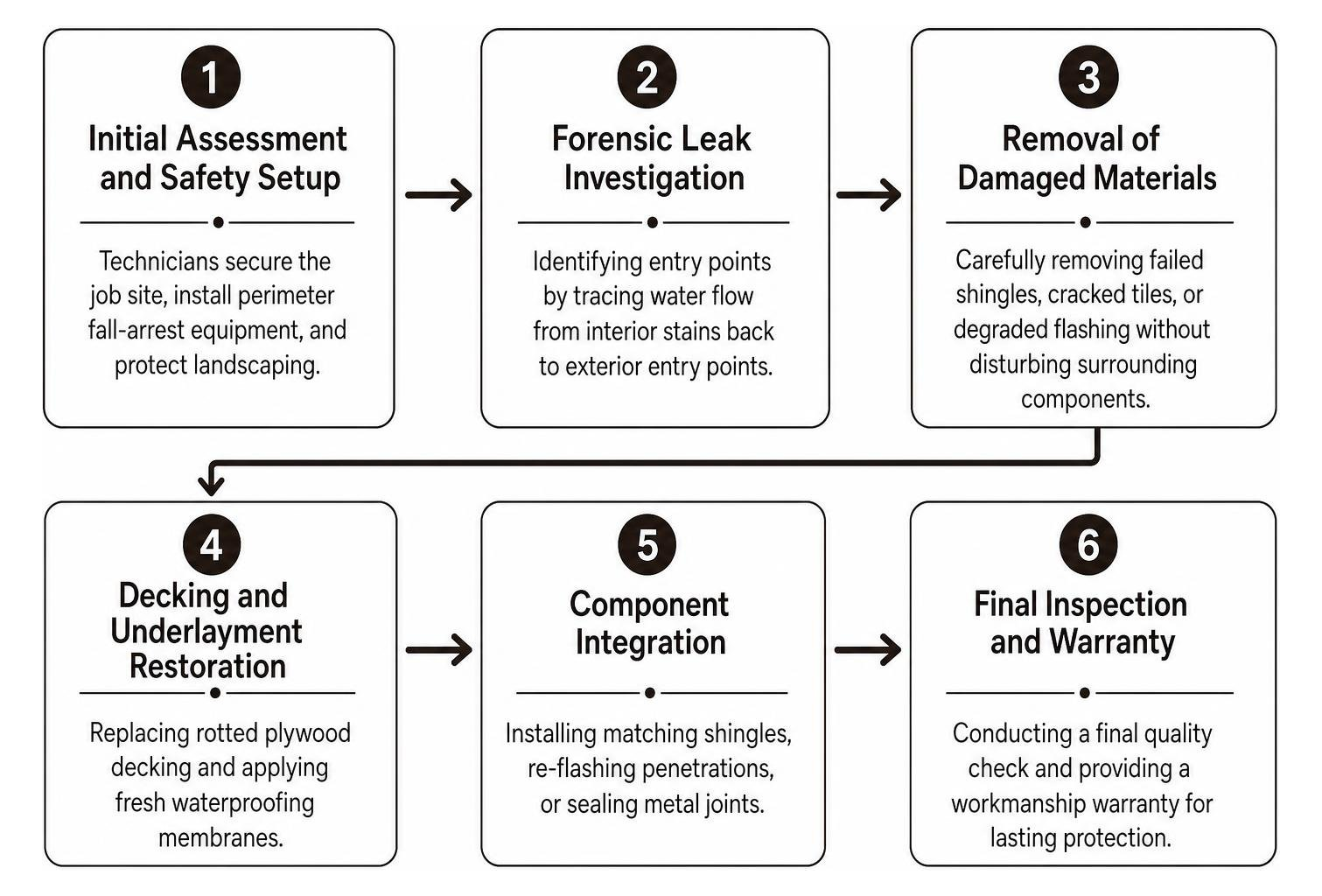
Initial Assessment and Safety Setup: Technicians secure the job site, install perimeter fall-arrest equipment, and protect landscaping.
Forensic Leak Investigation: Identifying entry points by tracing water flow from interior stains back to exterior entry points.
Removal of Damaged Materials: Carefully removing failed shingles, cracked tiles, or degraded flashing without disturbing surrounding components.
Decking and Underlayment Restoration: Replacing rotted plywood decking and applying fresh waterproofing membranes.
Component Integration: Installing matching shingles, re-flashing penetrations, or sealing metal joints.
Cleanup and Quality Inspection: Running magnetic sweeps for stray fasteners, clearing work debris, and providing photographic documentation.
Advanced Diagnostics and Inspection Technologies
Modern roofing diagnostics have evolved past basic visual guesswork. Comprehensive roof inspections—which typically cost $75 to $600—now employ sophisticated tools:
High-Resolution Drone Imaging: Aerial drones capture detailed footage of steep, fragile, or high-elevation roofs without risking foot-traffic damage to delicate materials.
Thermal Infrared Cameras: Thermal imaging detects temperature differentials in your ceiling and decking, spotting hidden moisture and saturated insulation trapped beneath the surface.
Electronic Moisture Meters: Pinpoint moisture meters trace the path of water behind finished walls, identifying active leaks before they cause rot or interior damage.
When working on complex roof designs, properly sealing transitions is critical. Expert technicians ensure watertight joints by properly detailing Flashing Around Chimney Metal Roof systems and Flashing a Chimney on a Metal Roof using step-flashing, counter-flashing, and high-performance sealants.
Repair, Rebuild, or Replace: Understanding the Differences
Homeowners often hear terms like repair, rebuild, and replacement used interchangeably, but each represents a distinct scope of work:
Roof Repair: A targeted fix addressing isolated damage, such as replacing a dozen blown-off shingles, resetting loose flashing, or sealing a vent boot. Completed within one business day.
Roof Rebuild (Targeted Section Restoration): Involves tearing down an entire section—such as a failing valley, dormer transition, or flat roof section—down to the rafters, replacing rotted decking, and rebuilding the assembly while leaving the remainder of the sound roof intact.
Roof Replacement: Complete removal of all existing materials across the entire structure down to the wooden decking, followed by full installation of new underlayment, drip edges, valley liners, and outer coverings.
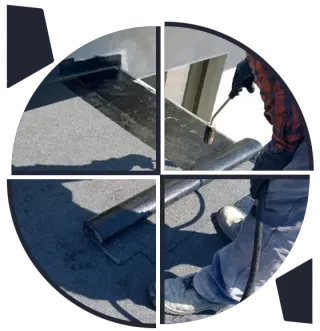
Low-slope and flat residential or commercial roofs require specialized expertise. Working with certified Flat Roof Repair Contractors or finding qualified Flat Roof Contractors in My Area ensures durable repairs on TPO, EPDM, PVC, and modified bitumen membranes.
How to Choose a Contractor and Navigate Insurance Claims
Selecting the right roofing partner protects you from poor artistry, inflated pricing, and unlicensed operators. In fact, approximately 60% of service calls from homeowners asking for a whole new roof can be resolved with a properly executed, cost-effective repair.
Vetting Local Roofing Contractors and Avoiding Scams
Always vet prospective contractors carefully before signing agreements or handing over funds:
Verify State Licensing and Full Insurance: Ensure the company holds active general liability insurance and comprehensive workers' compensation coverage.
Manufacturer Certifications: Top certifications (such as CertainTeed Select ShingleMaster or GAF Master Elite) and affiliations with trade bodies like the National Roofing Contractors Association show that a contractor adheres to strict installation and safety standards.
Workmanship Warranties: Reputable contractors stand behind their work with dedicated workmanship warranties (such as a 5-year workmanship guarantee) in addition to manufacturer material warranties.
Watch Deposit Limits: Be cautious of contractors demanding large upfront payments before delivering materials. In several states, upfront deposits for home improvement contracts are legally capped at one-third (33%) of the total contract price.
Beware of "Storm Chasers": Following major hail or wind events, transient out-of-town operators often knock on doors offering "free roofs." These crews frequently execute substandard repairs and leave the area, leaving homeowners without local warranty support.
Emergency Roof Repair and Storm Damage Protocols
When severe storms damage your roof, quick action prevents catastrophic water damage inside your home:
Emergency Tarping: Professional emergency tarping secures damaged sections against incoming rain. Typical emergency tarping runs $300 to $800 (often credited toward the final repair cost) and carries an emergency service fee of $100 to $300.
Rapid Stabilization: Reliable local contractors maintain 24-hour emergency response services, stabilizing active leaks within 24 hours and scheduling permanent repairs within 5 to 7 business days.
Mitigate Interior Loss: Place buckets under leaks, clear nearby furniture and electronics, and pierce bubbling ceiling drywall with a small screwdriver to relieve trapped water weight and avoid a ceiling collapse.
Filing Homeowners Insurance Claims for Storm Damage
If your roof suffers damage from sudden severe events like windstorms, falling trees, or major hail (which averages $4,250 per repair), your homeowners insurance policy will often cover the restoration costs above your deductible.
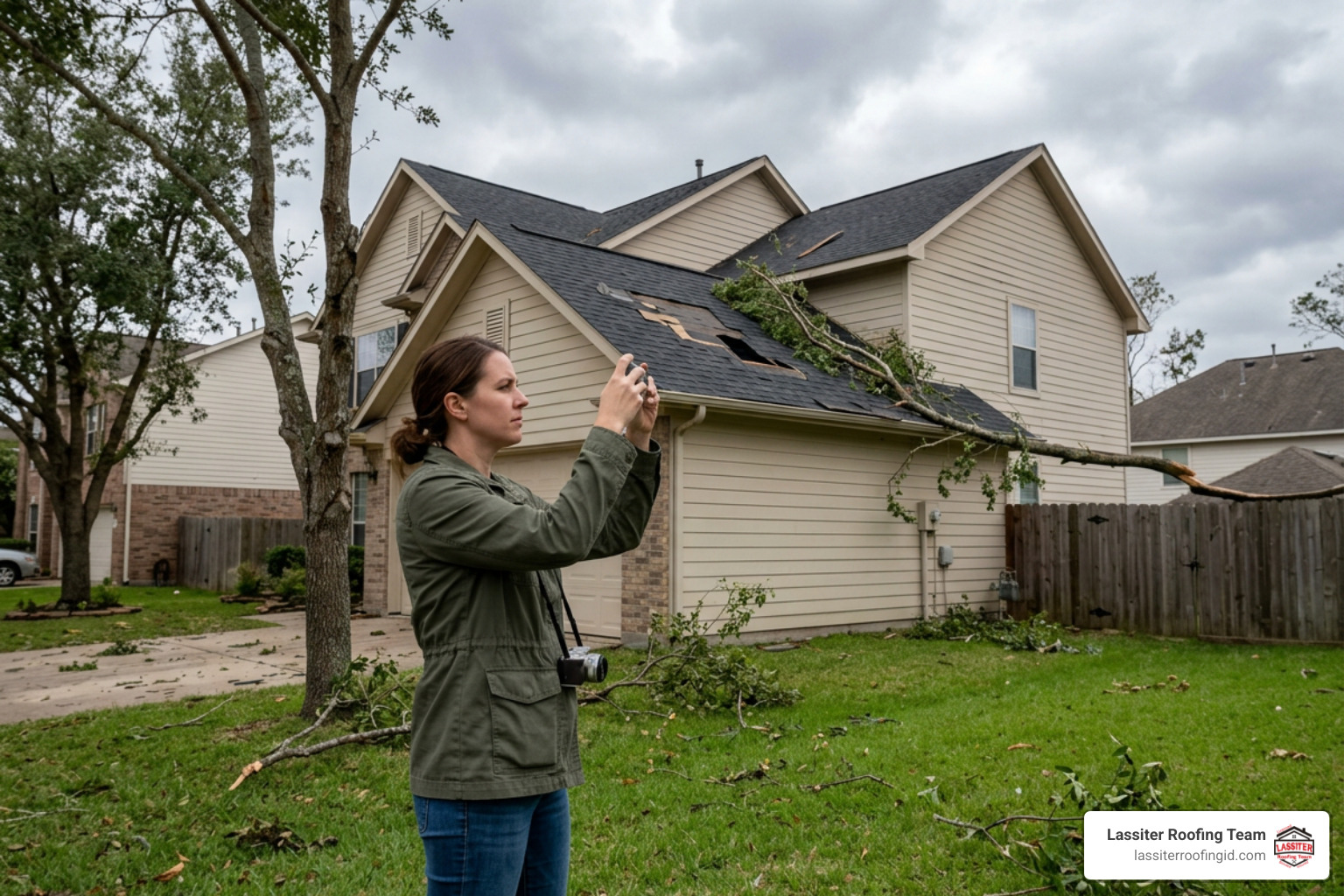
Document Everything: Capture clear photos and video footage of interior water damage, fallen exterior debris, and visible roof damage from ground level before cleanup begins.
Obtain a Professional Roof Inspection Report: Have your roofing contractor inspect the roof and compile an itemized assessment with aerial photos and scope measurements.
File Promptly: Contact your insurance carrier to open a claim. Present your contractor’s diagnostic report directly to the insurance adjuster to ensure all damage is accounted for in the claim settlement.
Understand Wear-and-Tear Exclusions: Homeowners insurance covers sudden, accidental perils. It typically does not cover leaks caused by deferred maintenance, manufacturer defects, or general wear on aging roofs.
Frequently Asked Questions About Roof Maintenance and Repairs
How much does the average roof fix cost in 2026?
In 2026, most residential roof fixes range between $395 and $1,966, with an overall national average of $1,173. Minor fixes like sealing pipe collars or securing a few shingles run between $300 and $700, while extensive repairs involving valley rebuilds, chimney flashings, or structural decking can range from $1,500 to $5,000.
Can damaged flashing and vent boots be fixed without replacing the entire system?
Yes. Damaged counter-flashing, step-flashing, and cracked rubber pipe boots can be replaced individually without replacing your entire roof. Technicians remove the surrounding shingles, install new corrosion-resistant flashing or heavy-duty pipe collars, and re-integrate the existing shingles with durable sealants.
What is the maximum deposit a licensed contractor can require up front?
While local regulations vary, industry standards and consumer protection laws in many jurisdictions cap upfront deposits at one-third (33.3%) of the total contract price. Never pay in full upfront, and only make final payments after the repair is completed, inspected, and documented with photos.
Conclusion
Your roof is your home's first line of defense against the elements. Proactive maintenance—such as clearing debris, cleaning gutters, and addressing minor shingle and flashing wear early—prevents small issues from turning into costly structural restorations.
At Lassiter Roofing, we bring over 30 years of hands-on construction, agricultural, and residential roofing experience to homes and businesses across Idaho's Western Treasure Valley. From asphalt shingle maintenance and standing seam metal repairs to low-slope TPO systems, we provide individually quoted competitive pricing backed by our trusted 5-year workmanship warranty. When you notice signs of roof damage, turn to our team for honest assessments and expert roofing services in Idaho to keep your property safe and dry for years to come.


