


Detailed Guide to Comparing Metal Roofing Options
Why Metal Roofing Can Be a Smart Long-Term Roof Choice
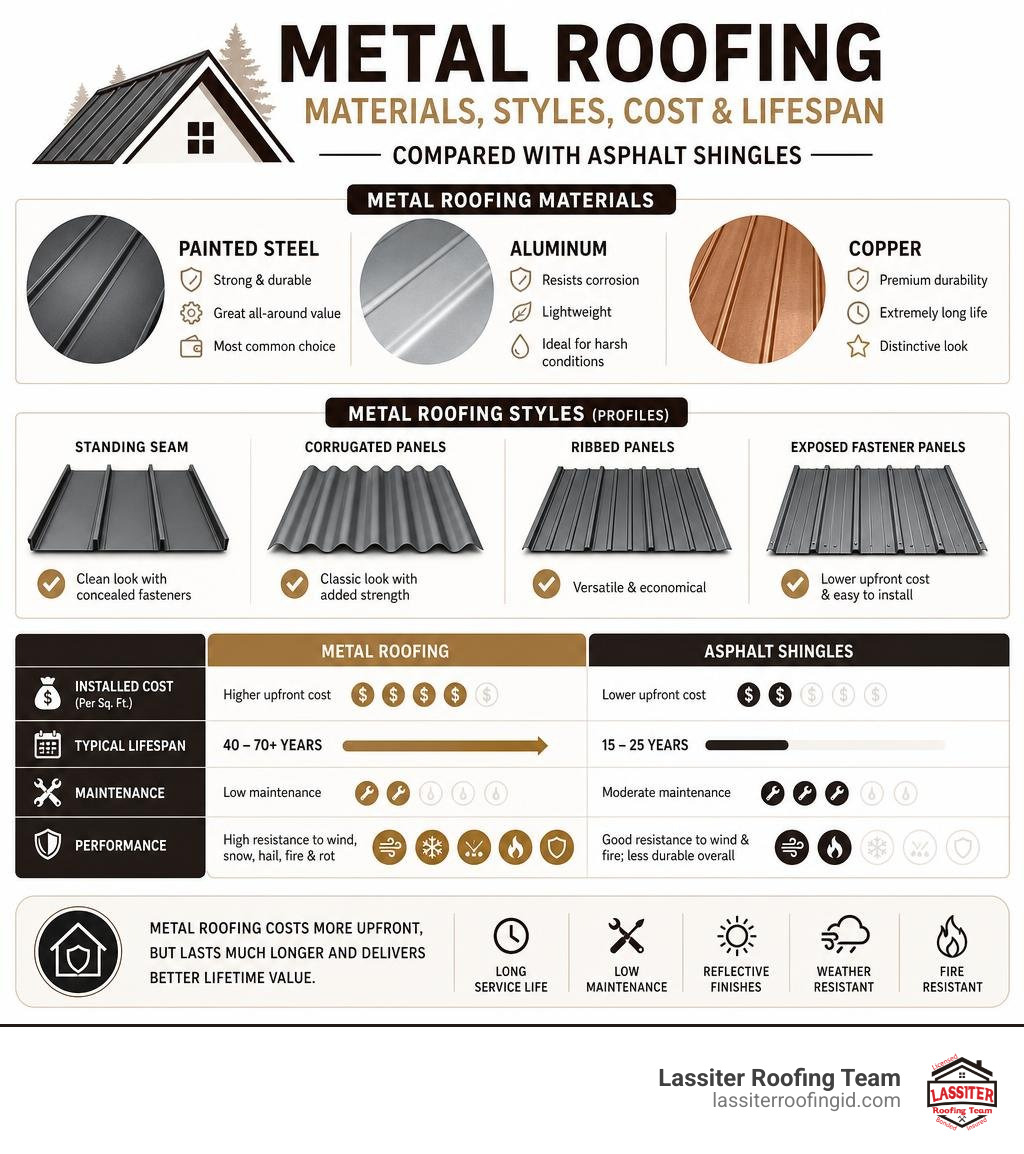
Metal roofing is a durable, weather-resistant option that can last 40 to 70 years or longer, while many asphalt shingle roofs need replacement much sooner. For Treasure Valley homeowners, the best choice usually comes down to three things: local weather exposure, roof design, and budget.
Choose painted steel for strong all-around value.
Choose aluminum where corrosion resistance and low weight matter most.
Choose standing seam for a clean look and concealed fasteners.
Choose corrugated or ribbed panels for a lower upfront cost.
Metal roofs cost more at installation than asphalt shingles, but their long service life, low maintenance needs, reflective finishes, and strong wind, snow, hail, and fire performance can make them a better lifetime value. Residential metal reroofing reached 18% of U.S. demand in 2022, reflecting growing interest in roofs built for the long haul.
I am Kason Walton, owner of Lassiter Roofing Team, with more than 30 years of construction, real estate, and roofing experience serving Idaho's Western Treasure Valley. In this guide, I will break down metal roofing materials, panel styles, costs, and installation factors so you can compare options with confidence.
Comparing Metal Roofing Materials and System Profiles
Choosing the right metal profile involves balancing structural load capacity, weather exposure, aesthetic goals, and lifetime value. Every metal roof system is defined by its core metal alloy, protective coating, and gauge thickness (where lower gauge numbers indicate a thicker, sturdier panel). For instance, a heavy-duty 24-gauge panel handles heavy snow and hail significantly better than an economy 29-gauge sheet.
Below is a direct comparison of the primary metal roof materials available across the residential and commercial markets as of September 2026:
Material | Average Lifespan | Weight per Sq. Ft. | Corrosion Resistance | Best Application | Relative Cost |
|---|---|---|---|---|---|
Galvanized / Galvalume Steel | 40–70 Years | 1.0 – 1.5 lbs | High (with protective alloy coating) | Standard residential homes, agricultural barns, commercial builds | Moderate ($$) |
Aluminum | 50+ Years | ~0.5 lbs (under 5 lbs total per square foot system) | Exceptional (100% rustproof) | Coastal areas, high-humidity regions, weight-restricted structures | Upper Moderate ($$$) |
Copper | 100+ Years | 1.2 – 1.8 lbs | Natural Patina Protection (non-corrosive) | Architectural accents, historic renovations, luxury estates | Premium ($$$$$) |
Zinc | 80–100 Years | 1.0 – 1.4 lbs | Self-healing protective carbonate layer | Modern architectural designs, eco-friendly builds | High ($$$$) |
Evaluating Steel, Aluminum, Copper, and Zinc
Steel is the undisputed workhorse of the industry. In residential applications, raw steel is protected using hot-dip galvanization (a pure zinc layer) or Galvalume (a specialized 55% aluminum and 45% zinc alloy). Galvalume offers exceptional resistance against continuous moisture and harsh UV exposure. Steel provides structural rigidity, making it ideal for resisting impact from large hail or heavy snow loads.
Aluminum is known for its remarkable strength-to-weight ratio. Because it contains virtually no iron, aluminum will never rust, making it the premier choice for marine or wet microclimates. Beyond weather resistance, top manufacturers like McElroy Metal - Leading Manufacturer of Metal Roofing and Metal Siding engineer aluminum systems with advanced high-performance coatings that maximize thermal efficiency. Aluminum roofing weighs as little as five pounds per square foot as a complete assembly and can save up to 20% on overall home heating and cooling.
Copper is one of history’s most proven building materials—it has guarded iconic architectural landmarks since antiquity. Over time, copper oxidizes from a bright bronze sheen into a distinctive, chalky-green patina. This outer patina acts as a permanent barrier against the elements. Copper roofing boasts a lifespan exceeding 100 years and has natural antimicrobial properties that naturally inhibit the growth of moss, lichen, and algae.
Zinc is a sustainable metal that produces a self-healing protective layer of zinc hydroxycarbonate. Minor surface scuffs and scratches repair themselves naturally over several seasons. Zinc requires just one quarter of the energy that it takes to process steel or copper and is 100 percent recyclable, delivering an exceptionally low lifecycle carbon footprint.
Popular Metal Roofing Styles and Panel Options
Metal panels can be tailored to match almost any architectural aesthetic:
Standing Seam: Characterized by sleek, vertical legs that project above the flat pan of the panel. Fasteners are concealed beneath interlocking seams, eliminating exterior penetrations. Systems such as 138T & 238T - Symmetrical Mechanically Seamed Standing Seam Roof Systems or Maxima Vertical Leg Standing Seam Roofing Panels deliver exceptional uplift resistance and clean architectural sightlines.
Corrugated & Ribbed Panels: Featuring repeating structural waves or U/V-ribs, these panels represent the most cost-effective metal roofing profile. While exposed fasteners require routine inspection, timely corrugated metal roof repair to replace aged gaskets preserves long-term weather tightness.
Stone-Coated Steel Shingles & Shakes: Stamped steel panels embedded with ceramic-coated stone granules replicate traditional architectural asphalt shingles, wood shakes, or Spanish clay tile while delivering the impact and fire resistance of metal.
Specialized Retrofit Profiles: Innovative engineering like the 138T Shingle Recover - Metal Over Shingles system permits symmetrical mechanical-lock standing seam panels to be installed over existing asphalt shingles using above-sheathing ventilation clips.

Exposed vs Concealed Fastener Systems
The fundamental difference between metal roof installations lies in how the panels attach to the underlying roof deck:
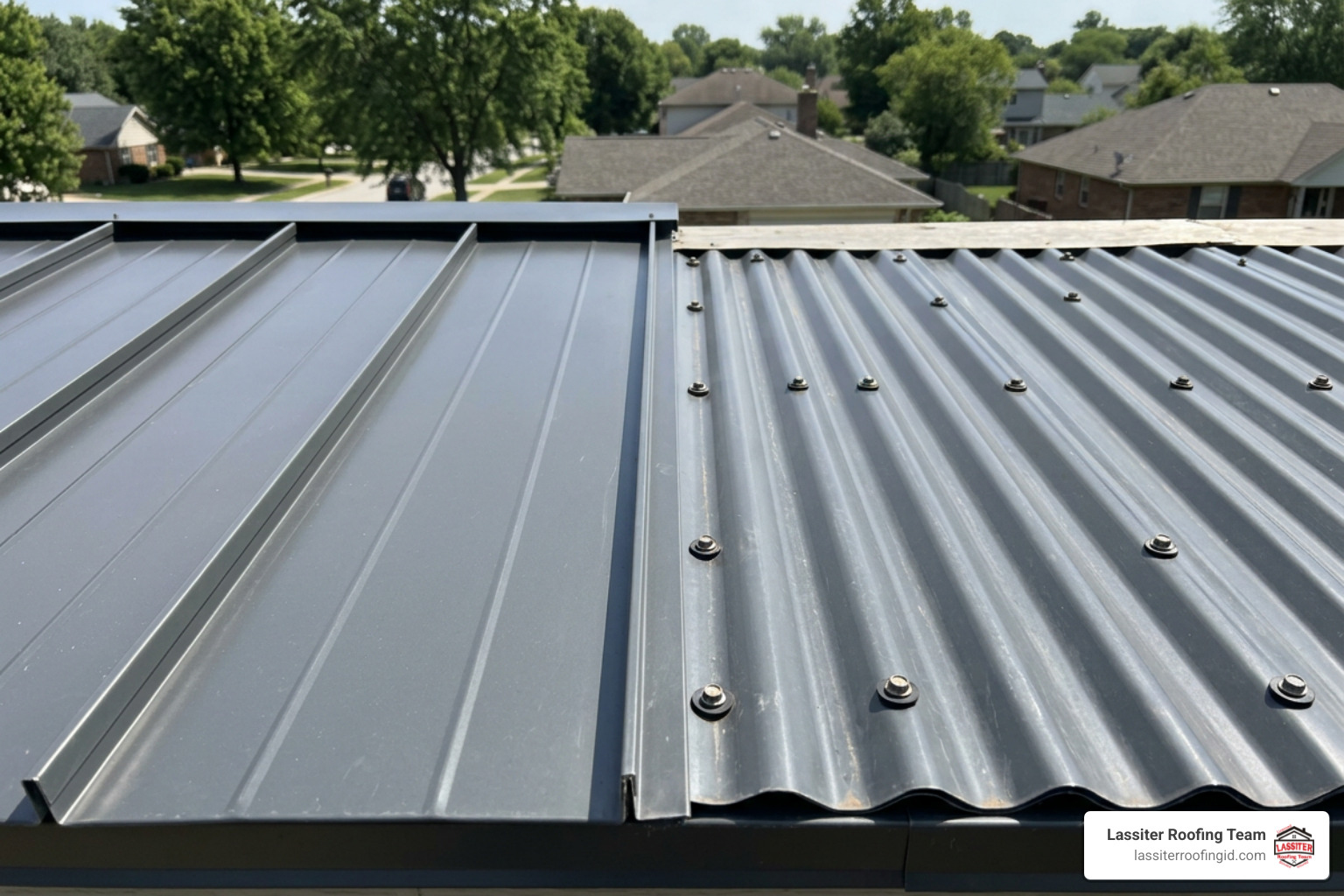
Exposed Fastener Systems (Corrugated / Ribbed Panels): Screws are driven directly through the exterior face of the metal panel into the deck framing. Each screw relies on an EPDM or neoprene rubber washer to create a water barrier. Because the fasteners sit exposed to direct sunlight, thermal expansion, and sub-zero freeze-thaw cycles, these rubber washers degrade and loosen over a 12- to 18-year period. While exposed fastener installations carry a lower initial labor cost, they require periodic fastener maintenance and re-torquing.
Concealed Fastener Systems (Standing Seam): Fasteners and clips are secured beneath interlocking male and female seams. Because no screw holes puncture the panel surface, there is virtually zero risk of water penetration along the roof slope. Furthermore, sliding clips allow the metal panels to expand and contract smoothly during wide temperature swings without pulling at screw penetrations or warping the flat pans. This delivers superior weather sealing, an unblemished modern look, and a leak-free lifespan measured in decades.
Cost Analysis: Long-Term Value vs Asphalt Shingles
While standard architectural shingles appear cheaper on an initial estimate, a life-cycle cost analysis reveals why metal roofing delivers superior long-term financial returns.
In the 2026 construction market, installed prices generally fall within these ranges:
Exposed Fastener Corrugated / Ribbed Metal: $7 to $12 per square foot installed.
Concealed Fastener Standing Seam Steel: $10 to $16 per square foot installed.
Premium Aluminum / Zinc / Copper Profiles: $14 to $30+ per square foot installed.
Standard Architectural Asphalt Shingles: $4.50 to $7.50 per square foot installed.
Upfront Installation Costs vs Lifecycle ROI
Labor typically makes up 60% to 70% of the overall cost for a premium metal roof installation. Metal panels demand skilled tradespeople who understand thermal mechanics, flashing details, and seaming techniques.
However, asphalt shingles typically fail in Idaho's climate after 18 to 25 years due to thermal cracking, UV embrittlement, and granule loss. Over a 60-year timeframe, a homeowner will typically purchase two to three complete asphalt roof replacements, each carrying escalating tear-off and dumping fees. A single standing seam metal roof outlasts multiple asphalt systems, eliminates continuous repair cycles, boosts curb appeal and home appraisal values, and often qualifies homeowners for up to a 15% discount on property casualty insurance policies due to Class 4 impact and Class A fire ratings.
Energy Efficiency and Utility Savings
Metal surfaces have naturally high solar reflectance and thermal emissivity. While asphalt shingles absorb heat and radiate it down into your attic framing, cool-roof coated metal panels reflect the sun's rays away from your living space.
Metal roofs' emissivity reflects 10%–75% of solar radiation depending on color, compared to asphalt roofs that reflect only 5%–25%.
Over their lifetimes, metal roofs keep 95% of their reflective capacity, compared to other roof types that lose 20%–40% of their reflective capacity due to dirt retention and organic degradation.
Metal roofs can offer a 40% reduction in energy costs in the summer and up to a 15% reduction in energy costs in the winter.
Commercial and residential projects can also implement Insulated Standing Seam Roofing - Composite Roof Panels or above-sheathing ventilation (ASV) systems. These create an insulating convective air layer between the roof deck and panels, reducing summer attic temperatures by up to 30°F.
Performance Across Extreme Weather and Environmental Impact
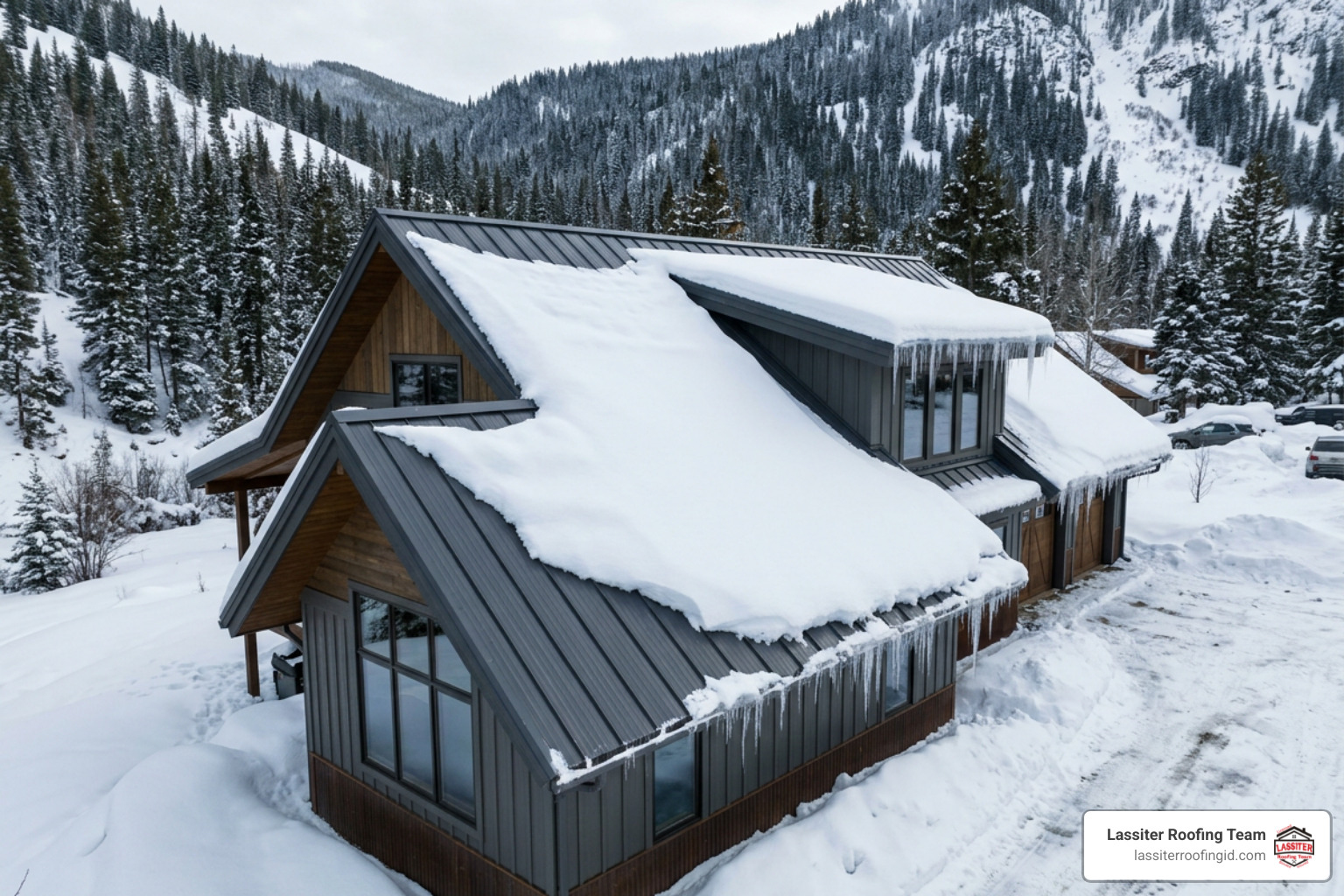
Metal roofs are engineered to withstand severe weather events that compromise conventional roofing materials. Whether facing hailstorms, mountain snow, or high wind events, metal systems provide exceptional defense for the home.
Impact Resistance (Hail): Most metal roofs achieve a UL 2218 Class 4 rating, the highest impact classification available. They resist rupture from severe hail strikes without cracking or water penetration.
Wind Uplift: Tested under ASTM E1592 standards, standing seam structural clips lock panels tightly down, withstanding hurricane-force wind gusts exceeding 140 mph.
Snow and Ice Shedding: The slick, continuous surface prevents heavy snow accumulations from bonding to the deck. With the integration of engineered snow-retention bracket clamps, heavy snow loads release in a controlled, safe manner without causing structural damage or ice dam backups.
Wildfire Resistance: Metal roofing carries an unconditional Class A fire rating when installed over non-combustible underlayments. Wind-driven burning embers cannot ignite a steel or aluminum surface, making metal an essential material for homes in Wildland-Urban Interface (WUI) fire zones.
Resistance to Wind, Hail, Heavy Snow, and Wildfires
Unlike shingles that can blow off or shatter in freezing temperatures, metal panels maintain their structural integrity across broad temperature extremes.
It is worth noting that flat metal panels can occasionally exhibit oil canning—a visible waviness in the broad, flat areas of light-gauge sheet metal caused by natural thermal expansion or uneven deck framing. While oil canning is a natural visual characteristic and not a structural defect, selecting heavier 24-gauge panels with pencil ribs or striations minimizes surface distortion and ensures a crisp, clean aesthetic.
Sustainability, Recyclability, and Urban Heat Islands
Every year, an estimated 20 billion pounds (9.1 million tonnes) of asphalt shingles are sent to landfills across the United States, where petroleum-based asphalt takes hundreds of years to decompose.
Metal roofing is an environmentally friendly alternative:
100% Recyclable: At the end of its decades-long service life, every metal panel, clip, and trim piece can be melted down and re-manufactured into new high-grade materials without degrading performance.
High Recycled Content: Aluminum roofing is composed of approximately 95% recycled material, and steel products contain anywhere from 25% to 80% recycled content.
Solar Compatibility: Standing seam ribs allow the non-penetrating attachment of crystalline solar arrays and thin-film solar laminates using mechanical S-5! standing seam clamps, protecting the waterproof roof membrane while generating clean, renewable energy.
Mitigating Heat Islands: Because metal roofs reflect heat away from neighborhoods rather than absorbing and radiating it into the surrounding environment, widespread adoption helps reduce urban heat island effects.
Key Installation Requirements and Structural Factors
A metal roof system is only as dependable as the flashing, underlayment, and substrate details beneath it.
Key installation requirements include:
Roof Pitch / Slope: Mechanically seamed standing seam panels can be installed on roof pitches as low as ½:12 or 1:12, whereas snap-lock standing seam profiles (like Skyline Standing Seam Metal Roofing | ASC Building Products) generally require a minimum slope of 3:12. Corrugated panels typically perform best on slopes of 3:12 or steeper.
Substrate & Decking: Most residential applications require a flat, solid 5/8-inch or 1/2-inch CDX plywood or OSB deck substrate to provide consistent fastener holding power.
High-Temperature Synthetic Underlayment: Standard organic felt can degrade under hot metal panels. Installers use high-performance synthetic roof underlayment along with self-adhering, ice-and-water barrier membranes along eaves, valleys, and rakes.
Custom Penetration Flashing: Chimneys, skylights, and plumbing stacks require precise metal fabrication. Flashings must incorporate continuous step-flashing, solder/sealant dams, and counter-flashings to manage runoff. For proper weatherproofing around chimneys, review our guides on flashing a chimney on a metal roof and detailed steps for flashing around chimney metal roof penetrations.
Professional vs DIY Metal Roofing Installation
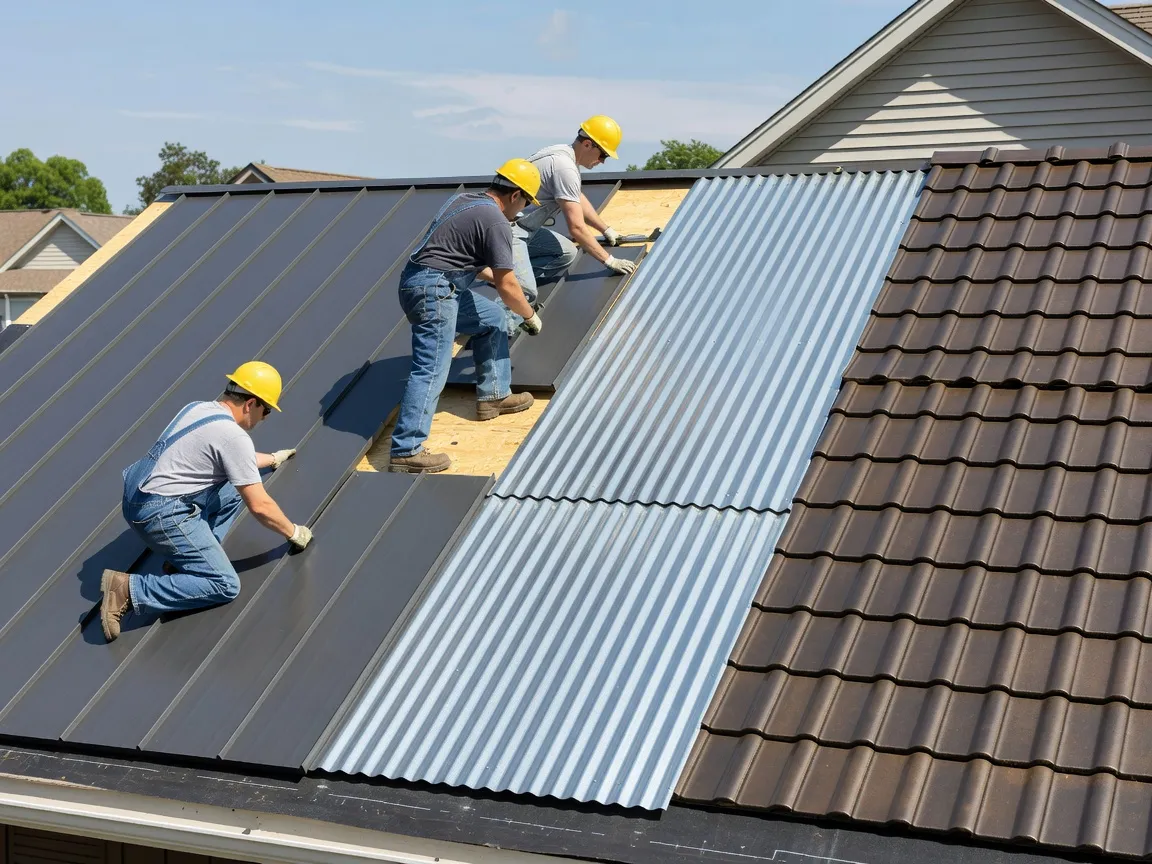
While an experienced homeowner can often install a simple corrugated metal roof over an open shed or detached garage, residential standing seam installations require specialized training.
Professional crews utilize motorized seaming machines, hand benders, continuous roll-forming machinery, and metal notching shears. Proper installation requires understanding thermal expansion rates, setting precise clip spacing per regional wind uplift codes, handling roof valleys, and executing watertight transitions around dormers and side walls. Improper fastening or missing thermal expansion gaps can result in fastener shear, buckle panels, or cause concealed deck rot.
Where to Source Panels and Quality Considerations
Retail home centers offer standard 8- to 12-foot utility corrugated steel panels (frequently 29- to 31-gauge with simple acrylic or SMP finishes). These products work well for small outbuildings, garden sheds, and basic residential porches.
However, whole-home residential and commercial projects should source custom roll-formed panels from certified metal roofing manufacturers. Commercial-grade systems utilize thick 26- to 22-gauge steel protected by PVDF (Kynar 500®) resin paint coatings. PVDF coatings resist UV fading, chalking, and environmental degradation, backed by 30- to 40-year color-retention warranties. Lower-tier Silicone-Modified Polyester (SMP) coatings are budget-friendly, but they experience noticeable chalking and color fading much sooner in intense, high-altitude sun.
Frequently Asked Questions About Residential Metal Systems
Can metal panels be installed directly over existing asphalt shingles?
Yes, in many jurisdictions, light-gauge metal panels and specialized retrofit systems (such as the 138T recover profile) can be installed directly over a single layer of existing asphalt shingles. This retrofit approach eliminates tear-off labor costs and keeps roofing debris out of municipal landfills. However, local building codes must be checked (most municipalities limit total roof layers to two), and the underlying roof decking must be inspected to ensure structural soundness and absence of dry rot.
How loud is a metal roof during rain and hailstorms?
When installed over solid plywood decking and high-density synthetic underlayment, coupled with modern attic insulation, a residential metal roof is no louder than a traditional asphalt shingle roof. The solid roof deck and ceiling insulation act as effective sound dampening barriers, absorbing acoustic vibrations and keeping rain noise quiet inside the home.
What warranties typically protect metal panel investments?
Quality metal roofing systems include two distinct warranty protections:
Manufacturer Product & Finish Warranty: Covers substrate perforation and corrosion (often 40 to 50+ years) alongside paint performance warranties against peeling, chalking, and excessive fading (typically 30 to 40 years for PVDF/Kynar coatings).
Workmanship Warranty: Provided directly by the installation contractor to cover labor, flashing seals, and water-tight assembly integrity. Lassiter Roofing provides an industry-leading 5-year workmanship warranty on all installations, backed by more than three decades of regional exterior construction experience.
Conclusion
Choosing a metal roof protects your home with modern durability, energy efficiency, and reliable weather resistance. Whether you select versatile Galvalume standing seam panels, rust-proof aluminum, or classic exposed-fastener profiles, a properly installed metal roof provides long-term peace of mind and enduring value.
With over 30 years of local construction and roofing expertise across Idaho's Western Treasure Valley, the Lassiter Roofing Team provides honest evaluations, individually quoted competitive pricing, and master-level metal craftsmanship.
Ready to upgrade your home or commercial building with a high-performance metal roof? Contact Lassiter Roofing today to request your personalized quote for metal roof siding installation Treasure Valley and explore our full range of exterior remodeling services.


