


Don't Let the Rot Spread: A Practical Guide to Soffit Repair Services
Why Timely Soffit Repair Protects Your Roofline
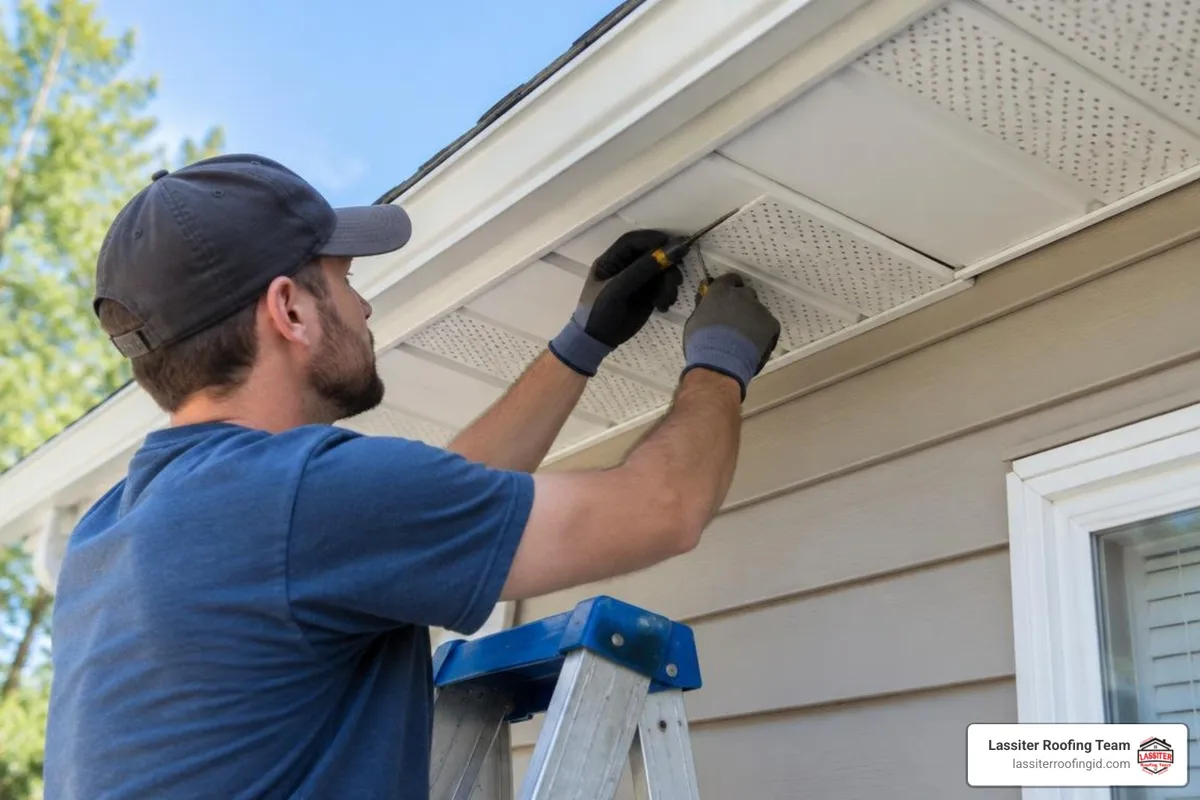
If you see sagging panels, peeling paint, water stains, holes, or pest activity near your eaves, hire a contractor who provides soffit repair services before moisture reaches the framing. A reliable repair should identify the cause - often a gutter leak, failed ventilation, storm damage, or rot - then replace damaged material, restore airflow, and seal entry points for pests.
Soffit is the finished surface beneath your roof's overhang. It helps protect rafter ends, supports attic intake ventilation, and closes off gaps that can let in wind-driven rain, insects, and animals. When it fails, a small panel repair can turn into costly rafter or roof-deck repairs after a wet season.
For Western Treasure Valley homeowners, changing weather makes early action especially important. Proper repairs should also account for fascia, gutters, and attic ventilation, because replacing a panel without fixing the water or airflow problem rarely solves the issue for long. According to the Building insulation principles used in modern construction, balanced intake and exhaust ventilation is essential for preventing trapped moisture and heat buildup in enclosed roof cavities.
I am Kason Walton, owner of Lassiter Roofing Team, with more than 30 years of construction and roofing experience serving residential, commercial, and agricultural properties across Idaho's Western Treasure Valley. In this guide, I will help you understand when to call for soffit repair services, what a fair repair should include, and how to choose a contractor with clear pricing and dependable warranty coverage.
What Are Soffits and Why Are They Vital for Home Protection?
The word "soffit" originates from the French word for "formed as a ceiling" and the Latin term for "to fix underneath." Structurally, it refers to the exposed underside of any architectural element, but in residential roofing, it denotes the horizontal material bridging the gap between your exterior siding and the outer edge of your roofline eaves.
Soffits perform three critical tasks:
Weather and Structural Barrier: Soffits cover the vulnerable, exposed timber of your roof rafters and trusses, shielding them from wind-driven rain, sleet, and ambient humidity.
Attic Intake Ventilation: Vented soffit panels draw fresh, cool outdoor air into the lowest point of your attic cavity, sustaining continuous cross-ventilation.
Pest Exclusion: A tightly sealed soffit acts as a physical barrier against birds, bats, squirrels, rodents, and stinging insects that view roof overhangs as ideal nesting grounds.
Soffits work alongside your fascia boards—the vertical architectural finishing edge where gutters mount. Properly integrated fascia and soffit systems form a secure perimeter envelope around your home.

The Critical Connection Between Soffit Health and Attic Ventilation
Your roof's longevity depends directly on balanced passive airflow. An attic functions on a continuous thermal cycle: cool exterior air enters through the intake vents located in the soffits beneath the eaves, travels upward through the roof rafters, warms up, and exits through high exhaust vents near the roof ridge.
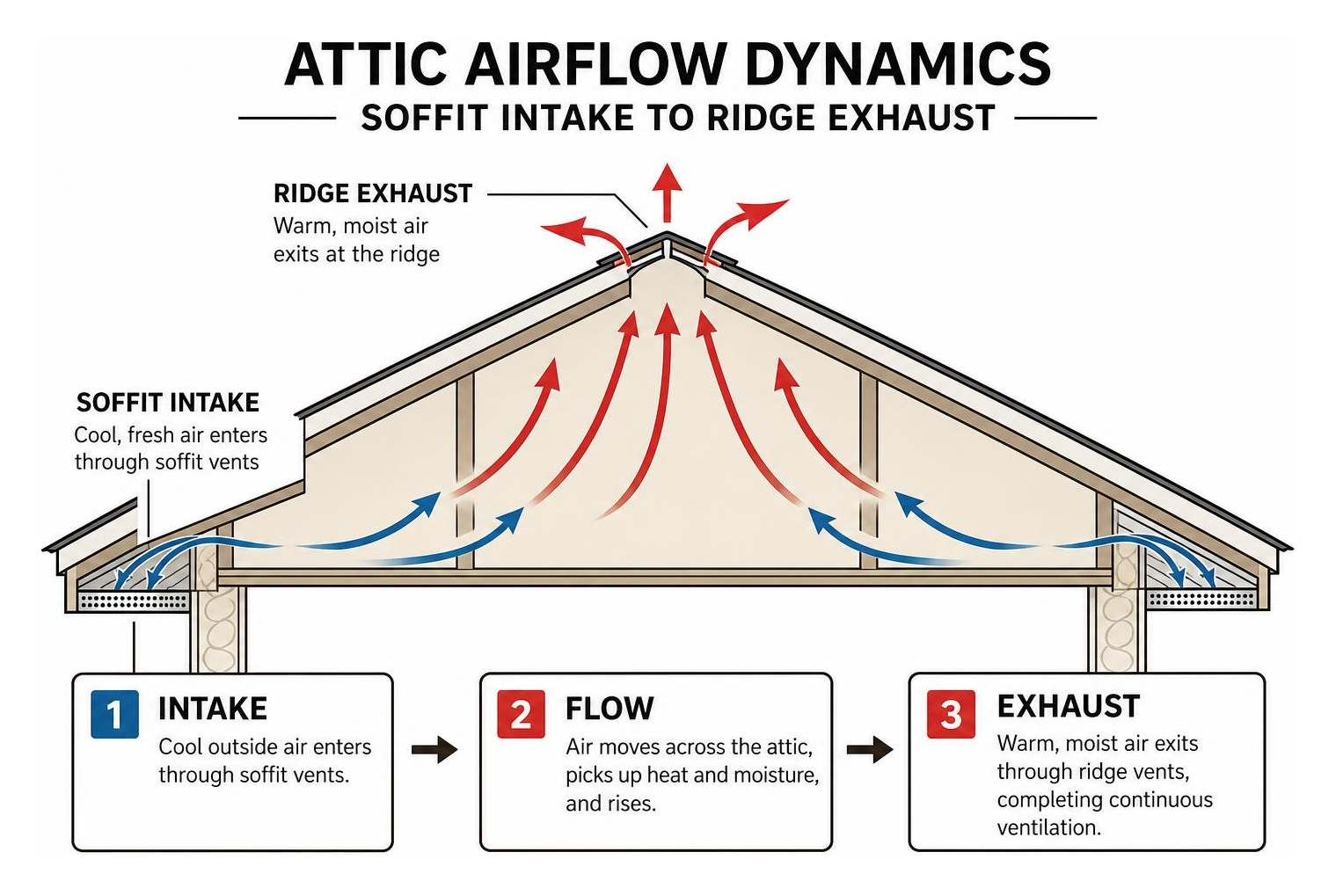
When soffits become rotted, crushed, or improperly sealed without ventilation grates, this thermodynamic cycle fails:
Summer Heat Dissipation: In scorching summer months, an unventilated attic traps extreme heat, often reaching 140°F to 150°F. This radiant heat bakes asphalt shingles from underneath, dramatically accelerating shingle degradation, curling, and granule loss while driving cooling bills upward.
Winter Moisture Control: During cold months, warm household air carrying moisture from cooking, laundry, and showers rises into the attic. Without adequate intake airflow to sweep this humidity outward through ridge vents, moisture condenses on cold roof sheathing and framing, fueling mold and rot.
Ice Dam Mitigation: In cold weather, stagnant warm attic air heats the upper roof deck unevenly, melting snow that runs down and refreezes at the cold eaves, creating ice dams. Functioning intake soffits keep the entire underside of the roof deck consistently cool, preventing that initial melt-and-freeze cycle.
When to Invest in Professional Soffit Repair Services
Recognizing early warning signs prevents isolated issues from expanding into major framing overhauls:
Peeling, Bubbling, or Flaking Paint: When paint cracks or peels beneath your eaves, it usually indicates moisture trapped inside the wood or backing material.
Sagging, Bowed, or Loose Panels: Sagging panels suggest broken fastening channels, rotted sub-framing, or weight strain caused by hidden water accumulation.
Visible Wood Rot or Sponginess: Soft, discolored, or crumbly lumber around the eaves indicates active fungal decay.
Animal or Pest Infiltration: If you hear scratching in the attic or spot birds, bees, or wasps entering gaps along the roofline, immediate panel reinforcement and sealing are necessary. A hole the size of a dime is enough for pests to exploit your eaves.
Water Stains and Streaks: Discoloration on exterior walls beneath the eaves points to water spilling over gutters or seeping past the fascia.
Common Causes of Soffit Damage in Cold and Variable Climates
Soffit systems face severe environmental stresses throughout the year:
Freeze-Thaw Cycles: Water finding its way behind panels expands as it freezes and contracts as it thaws, loosening nails, cracking vinyl, and driving moisture deep into structural timber.
Ice Damming and Gutter Overflow: When gutters back up with debris or ice, water pools along the roof edge and seeps backwards beneath the drip edge, running into the fascia and soaking the soffit.
Wind Uplift and Storm Gusts: High wind shear can dislodge panels from their receiving channels, especially if edge fasteners were spaced too far apart during original installation.
Condensation and Humidity Buildup: Trapped moisture inside an under-ventilated attic creates an ideal breeding ground for wet rot along rafter tails and nailing strips.
What to Expect from Professional Soffit Repair Services
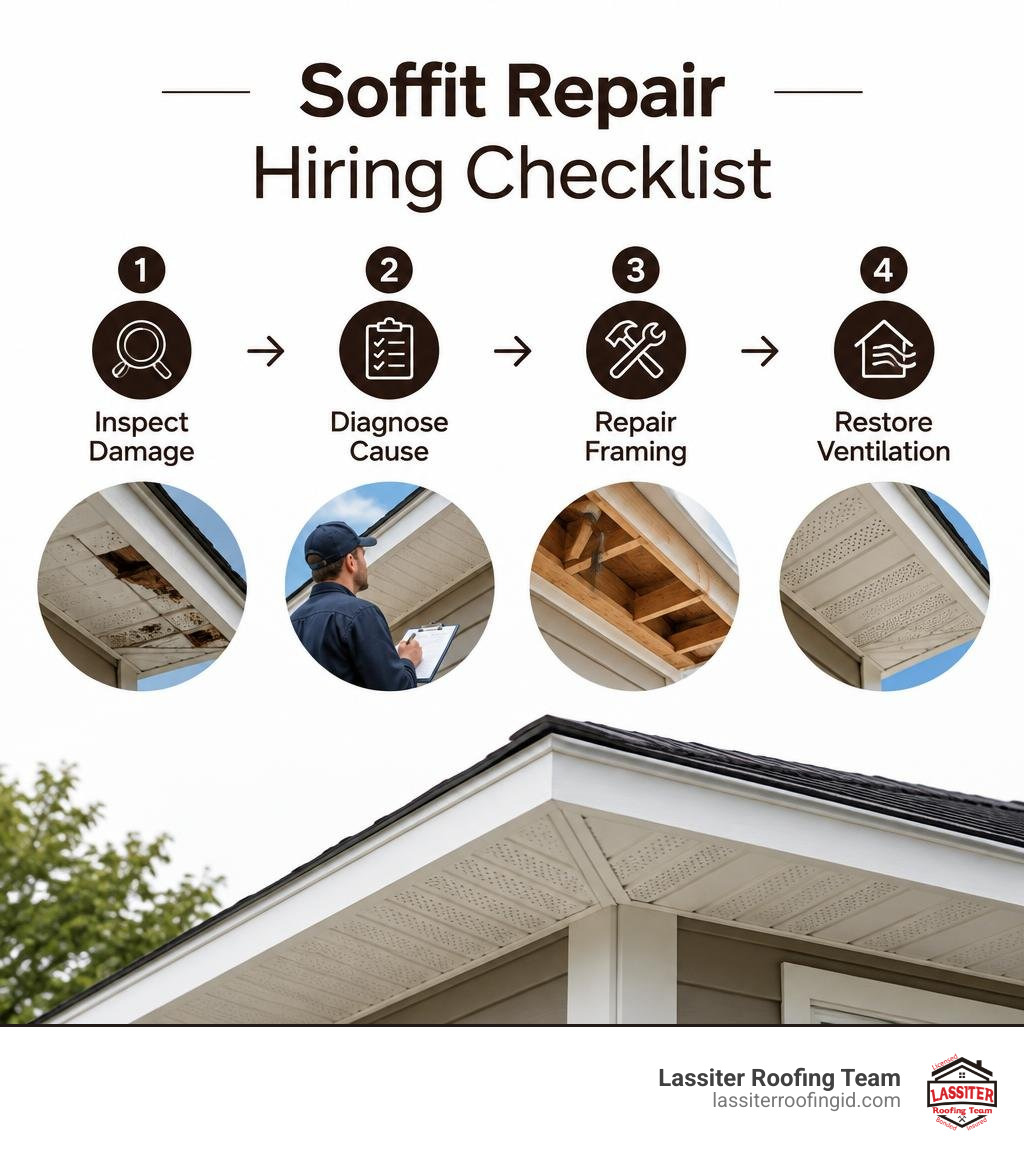
Professional repair follows a structured, step-by-step diagnostic and restoration process:
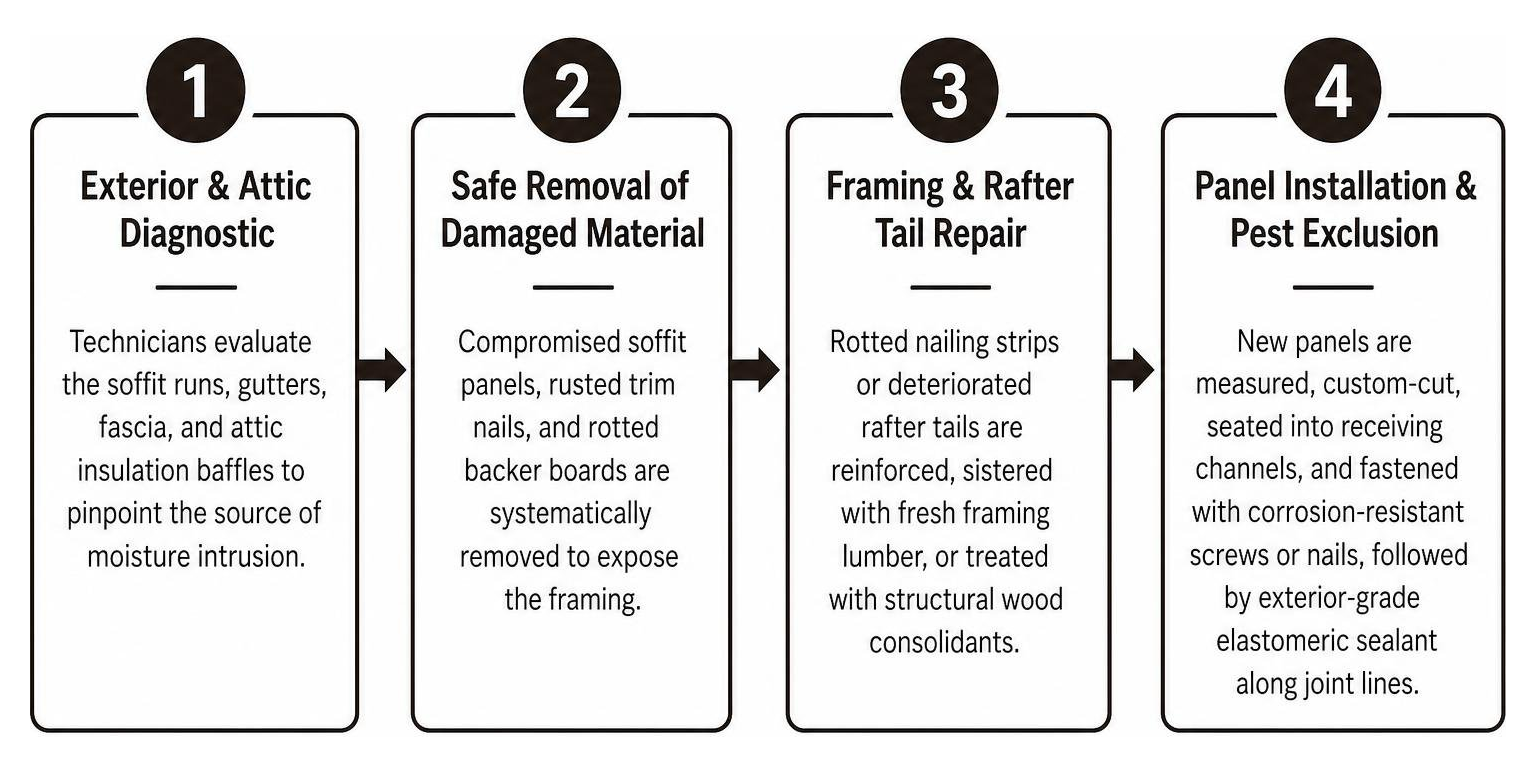
Exterior & Attic Diagnostic: Technicians evaluate the soffit runs, gutters, fascia, and attic insulation baffles to pinpoint the source of moisture intrusion. Scheduling a comprehensive free roof inspection helps identify whether minor soffit wear stems from broader roofing issues.
Safe Removal of Damaged Material: Compromised soffit panels, rusted trim nails, and rotted backer boards are systematically removed to expose the framing.
Framing & Rafter Tail Repair: Rotted nailing strips or deteriorated rafter tails are reinforced, sistered with fresh framing lumber, or treated with structural wood consolidants.
Ventilation Optimization: Technicians clear any loose insulation blocking airflow above the soffit vents and install insulation baffles where needed to keep intake paths unobstructed.
Panel Installation & Pest Exclusion: New panels are measured, custom-cut, seated into receiving channels, and fastened with corrosion-resistant screws or nails, followed by exterior-grade elastomeric sealant along joint lines.
Comparing Soffit Materials: Durability, Lifespan, and Maintenance
Choosing the right material depends on your home's architecture, local climate conditions, and long-term maintenance expectations.
Material | Lifespan | Maintenance Needs | Moisture & Pest Resistance | Best Suited For |
|---|---|---|---|---|
Aluminum | 30–50 Years | Extremely Low (occasional rinsing) | High (immune to rot and insect boring) | Modern builds, cold climates, variable weather |
Vinyl (uPVC) | 20–30 Years | Very Low (wash as needed) | High (waterproof, though brittle in deep freeze) | Budget-conscious projects, matching vinyl siding |
Natural Wood | 15–25 Years | High (requires paint/stain every 3–5 yrs) | Moderate (susceptible to rot, termites, woodpeckers) | Historic restorations, custom craftsman architecture |
Fiber Cement | 30–50 Years | Low-to-Moderate (paint touch-ups) | Very High (fireproof, rot-proof, pest-resistant) | High-durability builds, wildfire-prone areas |
Aluminum: The modern industry standard. It does not rot, crack, or burn, and it expands and contracts minimally during seasonal temperature swings.
Vinyl: Cost-effective and rot-proof, but can turn brittle under severe sub-zero cold or warp under concentrated high heat.
Wood: Offers unmatched traditional aesthetic warmth, but requires regular scraping, priming, and painting to stay protected from moisture decay and insect boring.
Fiber Cement: Exceptionally durable and non-combustible, but heavier and more labor-intensive to handle and install.
Partial Section Patching vs. Full Eave Replacement
Homeowners often wonder whether an entire roofline must be replaced when only a small section is damaged.
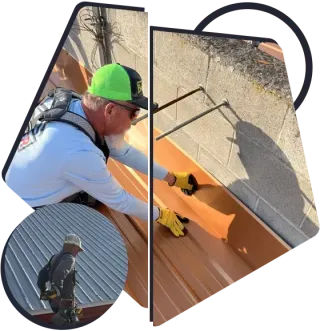
Partial Section Repairs (20 to 30 Linear Feet or Less): If rot or storm damage is localized—such as an isolated gutter overflow or a localized animal entry hole—contractors can cleanly remove the damaged panels, inspect the underlying framing, and install matching profiles. This saves money while restoring protection.
Full Eave Replacements: If the original material is obsolete, the underlying nailing strips are rotted across entire elevations, or systemic moisture has degraded the wood framing, full replacement is the most dependable, cost-effective path forward.
Soffit Repair Costs and Contractor Selection
Soffit repair pricing varies depending on linear footage, material choice, height accessibility, and whether underlying framing needs structural restoration.
Minor Spot Repairs (Small Holes, Loose Fasteners): Typically range from $150 to $350.
Moderate Section Repairs (10 to 30 Linear Feet): Typically range from $300 to $1,200.
Full Perimeter Replacement (Average Single-Family Home): Typically ranges from $1,500 to $5,000+.
Addressing damage early provides significant savings: what starts as a $400 panel repair can quickly escalate into a $3,000 rafter and roof sheathing replacement if moisture issues are left unaddressed through a single wet winter season. To review comprehensive exterior pricing, see our guide on fascia soffit and guttering replacement cost.
Homeowners planning repairs can easily request free estimate to get an itemized, clear breakdown tailored to their property's exact layout.
Choosing the Right Contractor for Soffit Repair Services
Hiring an experienced contractor ensures repairs resolve the root cause of the issue rather than simply masking symptoms. When interviewing contractors, keep this evaluation checklist in mind:
Licensing & Insurance: Always verify active state contractor licensing, general liability insurance, and comprehensive worker's compensation coverage.
Diagnostic Focus: Ensure the contractor inspects the attic space, gutters, and roof edges to pinpoint why the soffit failed instead of just quoting cosmetic panel swaps.
Material Matching Capabilities: Ask how they source matching profiles and colors to maintain your home's exterior appeal.
Workmanship Warranties: Look for clear, multi-year workmanship guarantees backing up the installation quality.
If you have questions about your home's eaves, you can easily contact us to speak directly with an exterior roofing specialist.
Frequently Asked Questions About Soffit Repair
How much does professional soffit repair typically cost?
Most partial soffit repairs cost between $300 and $1,200, depending on the accessibility of the eaves, the chosen material, and the extent of framing rot. Minor patch jobs for small holes start around $150 to $250, while full-home perimeter replacements range from $1,500 to upwards of $5,000.
How long does a typical soffit repair project take?
Most isolated spot repairs take between 2 to 4 hours to complete. Replacing a full run along one side of a residential home usually takes a single working day. Larger projects involving multi-story structures or extensive rafter reconstruction may require 2 to 3 days.
Can damaged soffit be repaired in sections without replacing the entire run?
Yes. As long as the surrounding nailing channels and framing remain structurally sound, a contractor can cut back and remove only the compromised panels. New vented or solid panels are matched to your existing profile, slotted into place, and sealed securely.
Conclusion: Protect Your Roofline with Timely Repairs
Your soffits play a central role in keeping your home dry, structurally sound, energy-efficient, and pest-free. Overlooking sagging panels or minor rot invites moisture deeper into your rafter tails and attic spaces, driving up repair costs over time.
At Lassiter Roofing, we bring over 30 years of hands-on experience providing residential, commercial, and agricultural exterior solutions across Idaho's Western Treasure Valley. Every project we undertake includes individually quoted, competitive pricing supported by our dedicated 5-year workmanship warranty. Protect your roofline by scheduling an inspection today.


