


Replacing an Asbestos Garage Roof Without Breaking the Bank
Why Asbestos Roof Replacement Near Me Is More Urgent Than You Think
If you've been searching for asbestos roof replacement near me, here's what you need to know upfront:
Quick Answer: Asbestos Garage Roof Replacement at a Glance
Question Short Answer Does my garage have asbestos? Likely yes if built before 1980; confirm with PLM lab test Is it dangerous right now? Only if cracked, weathered, or disturbed Can I remove it myself? Strongly discouraged; illegal in most jurisdictions without permits How much does it cost? $1,500–$5,000 for a typical garage (single or double) How long does it take? Usually 1–3 days for a residential garage Do I need a licensed contractor? Yes, in virtually every state
Across Idaho's Western Treasure Valley, thousands of older garages still have their original roofs — many installed between the 1940s and 1980s, when corrugated asbestos cement was one of the most common roofing materials available. It was cheap, fire-resistant, and built to last. The problem? Those same panels are now aging, cracking, and in some cases releasing microscopic fibers that pose serious long-term health risks.
The catch is that most homeowners don't realize what's above them until a storm rolls through or a repair job is underway — and by then, disturbing the material without proper precautions can turn a routine roofing project into a hazardous situation with real legal and health consequences.
I'm Kason Walton, owner of Lassiter Roofing Team, and with over 30 years of hands-on experience in construction and roofing across the Western Treasure Valley — including guiding homeowners through asbestos roof replacement near me projects safely and affordably — I've seen how quickly costs and risks can spiral without the right plan. In this guide, I'll walk you through everything you need to know to handle your asbestos garage roof the right way.
Identifying Asbestos Roofing and Assessing Exposure Risks
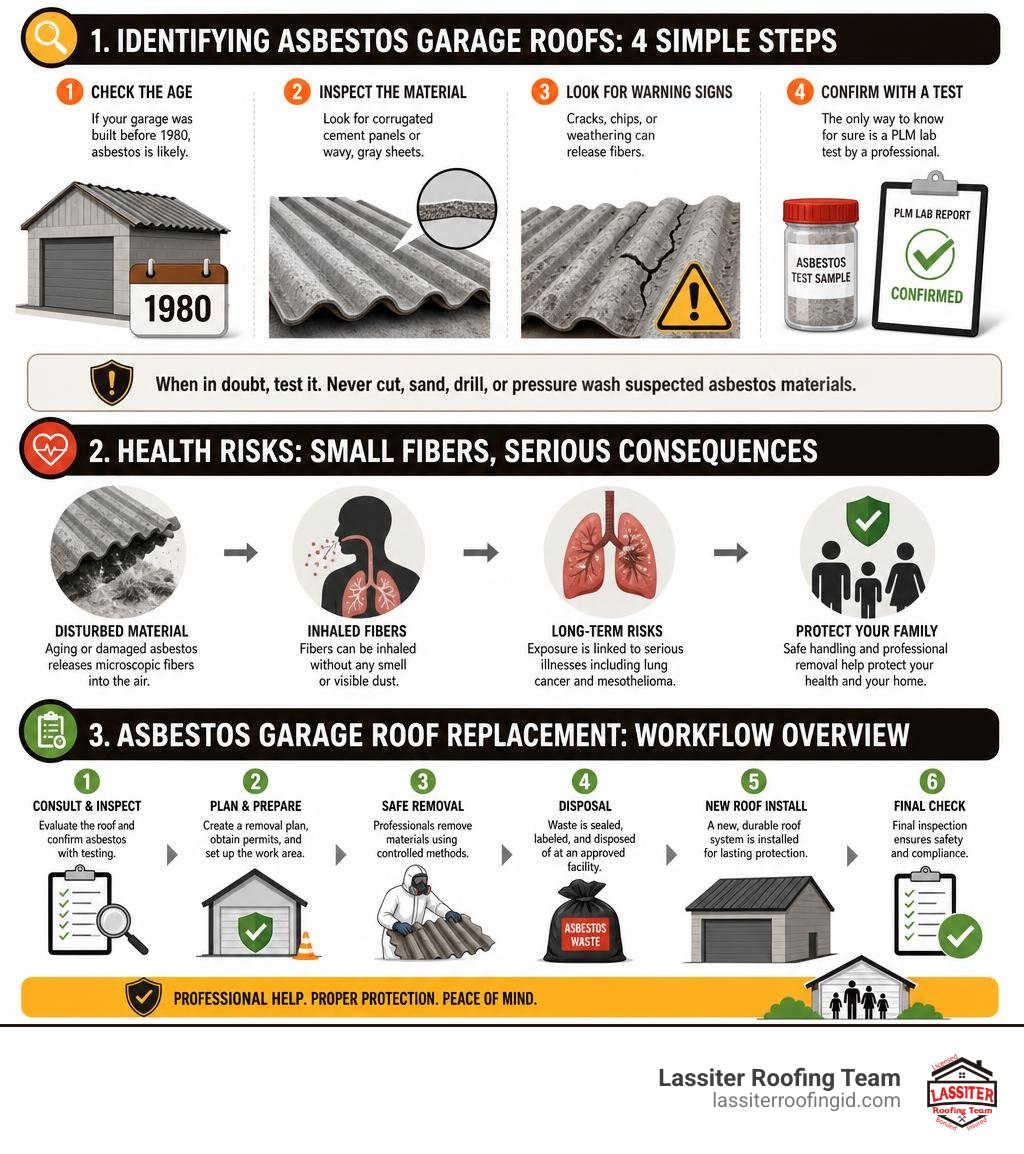
Before planning a roof replacement, you must know what you are dealing with. Asbestos was integrated into construction products as early as the 1920s due to its fireproofing strength, and the Environmental Protection Agency (EPA) classified it as a known carcinogen in the late 1970s. In roofing, it appears most frequently in pre-1980 cement shingles, corrugated panels, underlayment felts, and roof mastics.
Visual Indicators and Professional Lab Testing
Visual clues can offer initial guidance, but visual inspection alone is never enough to confirm asbestos presence. Common physical traits on pre-1980 roofs include:
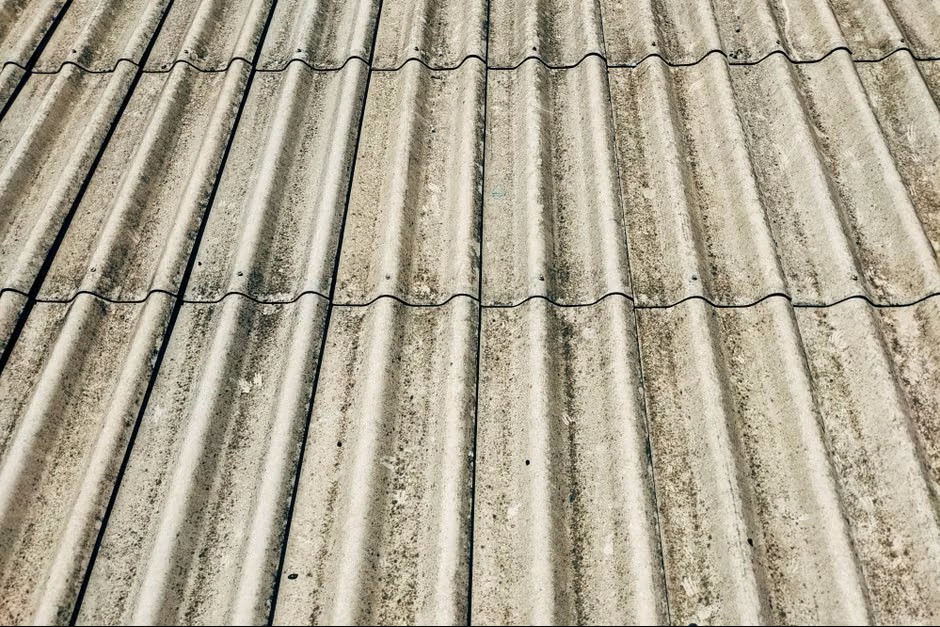
A dull grey, weathered appearance on corrugated panels.
A faint dimpled texture similar to the surface of a golf ball.
Fasteners secured with heavy, mushroom-headed metal bolts.
Scalloped or rigid, cement-like shingle profiles.
Because these features mirror non-asbestos fiber cement introduced later, sampling is essential. A Certified Asbestos Consultant takes bulk samples for Polarized Light Microscopy (PLM) analysis. PLM testing is the industry standard for bulk material identification, costing between $30 and $150 per sample with turnaround times of 24 to 72 hours.
Is Living Under an Asbestos Roof Safe?
An asbestos roof in good condition does not pose an immediate danger to residents. Asbestos fibers are trapped within the cement matrix (typically 10% to 15% chrysotile content by weight).
However, environmental exposure takes its toll over time:
Weathering & UV Degradation: Decades of sun, rain, and snow break down the surface binder, exposing raw fibers.
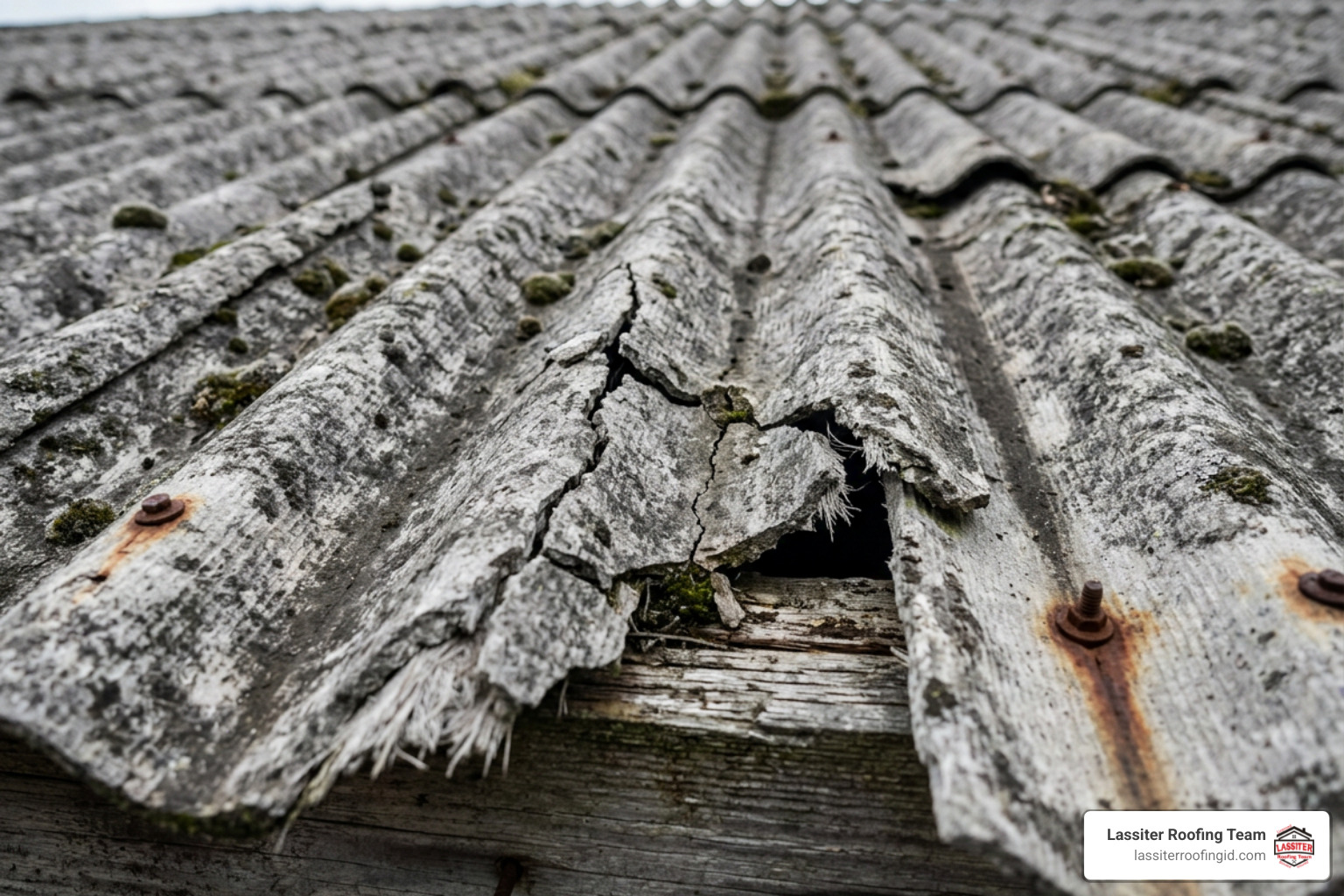
Microscopic Cracks: Freezing temperatures cause microscopic expansion cracks, loosening airborne particulate matter.
Latency Period: Inhaled chrysotile fibers cause conditions such as asbestosis, lung cancer, and mesothelioma. These diseases have a long latency period ranging from 20 to 50 years between initial exposure and the onset of symptoms.
The EPA recognizes no safe baseline level of exposure to disturbed airborne asbestos fibers. If a roof panel is cracked, crumbling, or eroded, immediate remediation is required.
Regulations, Licensing, and DIY vs. Professional Removal
Because asbestos fibers are hazardous, federal, state, and municipal authorities strictly regulate how materials are handled and discarded. The National Emission Standards for Hazardous Air Pollutants (NESHAP) governs environmental handling, while OSHA sets strict workplace standards.
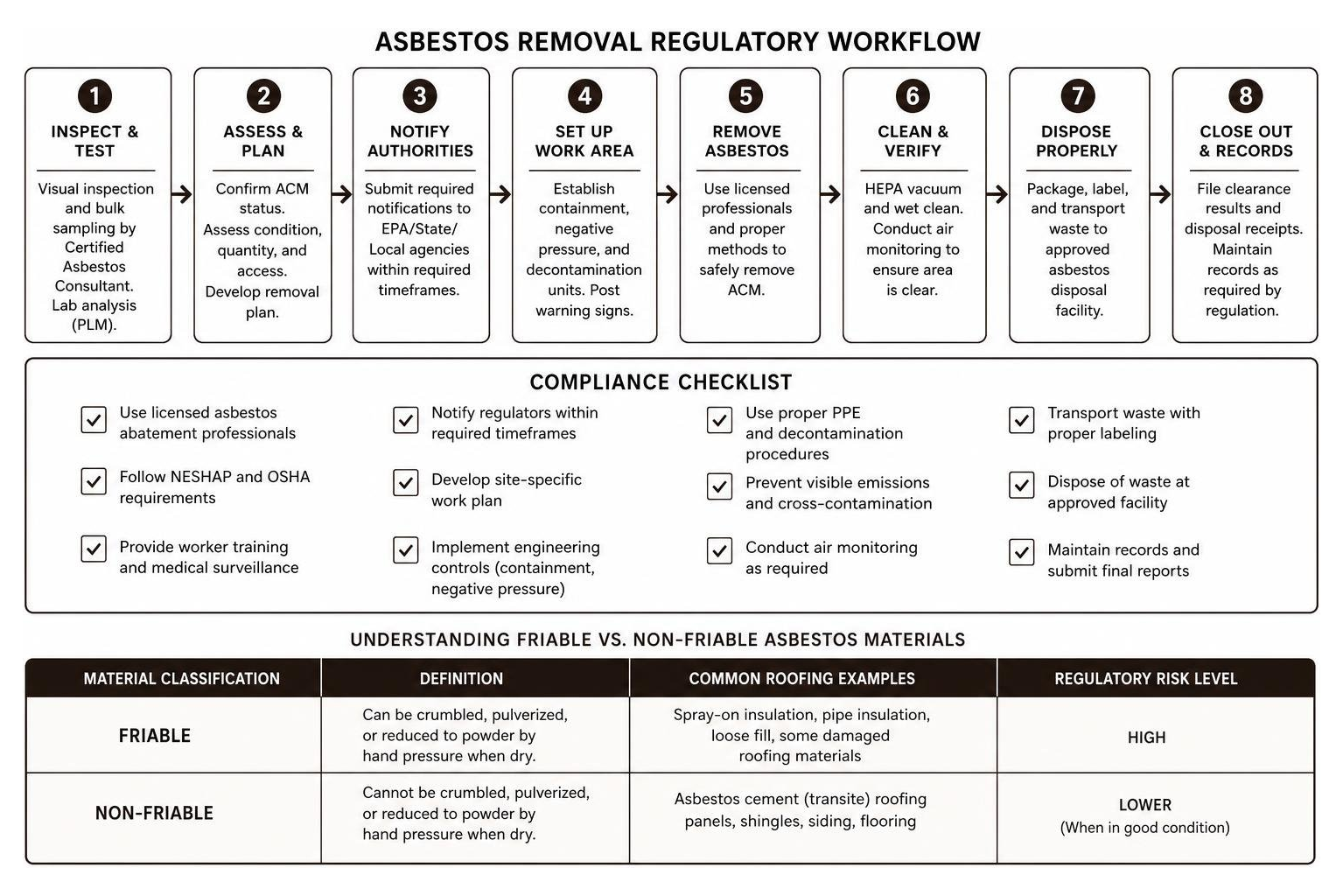
Understanding Friable vs. Non-Friable Asbestos Materials
Regulations divide asbestos-containing materials into two distinct operational categories based on how easily they crumble:
Material Classification Definition Common Roofing Examples Regulatory Risk Level Non-Friable (Category I) Materials that cannot be pulverized or crumbled by hand pressure when dry. Intact asphalt shingles, roof mastics, sealants, roll roofing. Lower risk unless mechanically cut, sanded, or sawn. Non-Friable (Category II) Materials non-friable when intact, but likely to crumble under force or weathering. Asbestos-cement shingles, corrugated transite roof sheets. High risk of becoming friable during demolition or severe storm damage. Regulated Asbestos Containing Material (RACM) / Friable Materials easily reduced to powder or dust by human hand pressure when dry. Deteriorated felt insulation, pulverized cement shingles. Maximum hazard level; requires full environmental containment and licensed abatement.
Under NESHAP, if mechanical tools like rotating blade cutters are used on Category I roofing, removing 5,580 square feet generates the regulated 160-square-foot threshold of RACM, triggering mandatory reporting. For Category II materials like cement sheets, breaking or crushing 160 square feet instantly subjects the project to full federal abatement standards.
When to Hire Licensed Professionals for Asbestos Roof Replacement Near Me
When searching for asbestos roof replacement near me, verify that the abatement team holds specialized certifications. In many states, this requires a specialized abatement classification (such as a C-22 license in California or state-specific environmental department credentials).
While some states permit owner-occupants of single-family homes to handle small projects, DIY removal is strongly discouraged for several reasons:
Severe Fines: Illegal disposal or dumping of hazardous waste carries strict penalties ranging from $5,000 to $25,000 per violation.
Hidden Expenses: Homeowners must still pay for CAC bulk testing, official air quality monitoring, state notifications, and heavy hazardous waste disposal manifests, making DIY savings minimal.
Contamination Risks: Without specialized HEPA negative pressure equipment, disturbing sheets can contaminate your driveway, yard, and HVAC systems.
Regional service hubs across the nation follow strict regulatory models for safe handling. Detailed removal compliance guidelines and environmental safety rules are maintained by state environmental departments and the U.S. Environmental Protection Agency (EPA).
Step-by-Step Asbestos Abatement and Roof Installation Process
A proper asbestos roof replacement follows a precise two-phase protocol: certified hazardous abatement (Phase 1) followed by structural inspection and modern roof construction (Phase 2).
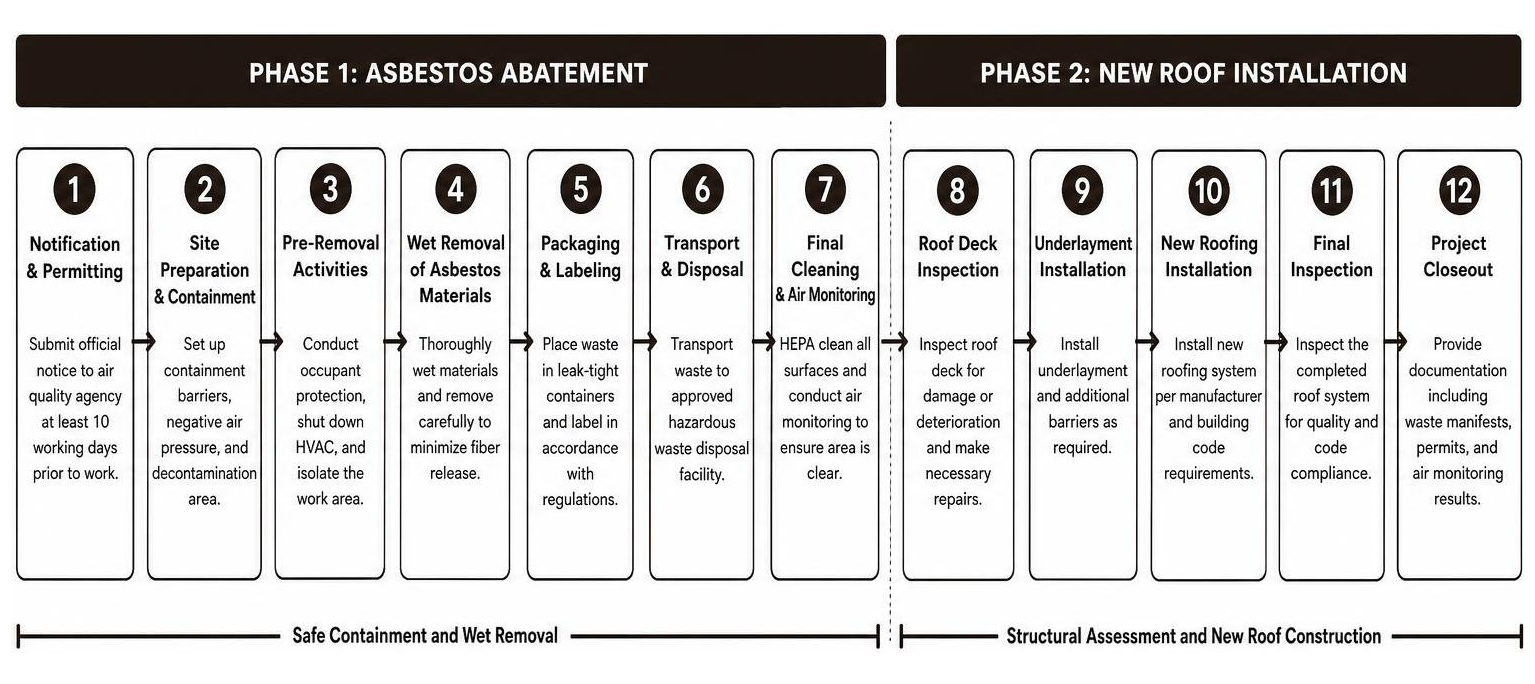
Phase 1: Safe Containment and Wet Removal
During the initial abatement phase, trained technicians secure the site to protect the surrounding environment:
Notification & Permitting: Submitting an official notice to state or local air quality agencies at least 10 working days prior to active work.
Site Containment: Sealing garage windows, doors, and floor areas with heavy 6-mil polyethylene plastic sheeting.
Surfactant Application: Spraying continuous water mist mixed with wetting agents across all cement panels to keep fibers saturated and airborne dust at zero.
Manual Unfastening: Carefully removing mushroom-head bolts and lifting panels intact without breaking, sawing, or dropping them to the ground.
Sealed Packaging: Wrapping removed sheets in double-layer 6-mil polyethylene bags, applying OSHA warning labels, and transporting waste under registered manifests to an approved hazardous landfill.
HEPA Vacuuming & Air Clearance: Cleaning structural framing with medical-grade HEPA filtration vacuums (rated 99.97% efficient down to 0.3 microns) and receiving third-party air clearance confirmation.
Certified abatement teams across the country follow these exact protocols to maintain compliance with federal safety standards.
Material Upgrade Options During Asbestos Roof Replacement Near Me
Once the site receives environmental clearance, Phase 2 begins. Before installing new materials, we perform a thorough rafter and framing audit. Heavy asbestos cement panels often conceal decades of hidden moisture rot, sagging purlins, or insect damage.
After completing structural repairs and installing new solid roof decking, homeowners can choose from modern replacement materials:
Steel Metal Panels ($7 to $15 per sq. ft.): The preferred replacement choice for detached garages. Lightweight ribbed steel eliminates dead weight on older frames and offers a 40- to 70-year service life.
Architectural Asphalt Shingles ($3 to $6 per sq. ft.): Cost-effective and matches your primary home. Provides 15 to 30 years of protection.
EPDM Rubber Membrane ($4 to $8 per sq. ft.): Ideal for low-pitch or flat garage roofs, delivering seamless waterproofing.
TPO Single-Ply Membrane: Highly reflective flat-roof material that reduces heat buildup inside outbuildings.
Comprehensive contractors frequently handle both the hazard mitigation and the structural re-roofing phases together to ensure a seamless transition.
Cost Breakdown for Asbestos Roof Replacement Near Me
Understanding the financial breakdown prevents unexpected surprises. Nationwide, full exterior roof abatement averages $50 to $150 per square foot for complex home structures, but outbuildings and residential garages are generally far more affordable.
Primary Factors Influencing Total Replacement Expenses
For a standard residential garage, total turn-key replacement costs depend on size, structure, and accessibility:
Single-Car Garage (approx. 240 sq. ft.): $1,500 to $3,000 total (combining testing, abatement, and basic re-roofing).
Double-Car Garage (approx. 400–500 sq. ft.): $2,500 to $5,000 total.
Key pricing variables include:
Roof Pitch & Accessibility: Steeper pitches require specialized rigging, staging, and tie-off containment, increasing labor rates.
Material Condition: Severe damage or friable breakage requires full containment enclosures, raising Phase 1 costs.
Replacement Material Selected: Basic asphalt shingles cost significantly less upfront than standing-seam metal or fiber cement.
Local Waste Fees: Landfills charge specialized tipping fees for hazardous cement waste based on weight and packaging.
For broader residential projects, property owners should review detailed estimates provided during initial site assessments to ensure all abatement, disposal, and rebuilding expenses are accurately accounted for.
Financial Considerations and Home Sale Disclosures
If you plan to list your house on the market, addressing an asbestos garage roof early protects your financial equity. Real estate property disclosure laws require sellers to report known asbestos hazards.
Leaving a deteriorating asbestos roof unaddressed often leads to:
Lower buyer offers or hefty seller-credit demands during closing.
Failed home buyer mortgage inspections or delayed hazard insurance approvals.
Extended time on the market.
Additionally, owners of designated historic structures may qualify for historical preservation grants or municipal improvement loans to offset roof restoration and replacement costs.
Frequently Asked Questions About Asbestos Roof Replacement
Can I remove an asbestos garage roof myself to save money?
While single-family owner-occupants may be legally exempt from certain commercial NESHAP regulations in select jurisdictions, DIY removal is strongly discouraged. Disturbance releases airborne chrysotile fibers into your residential property. Furthermore, mandatory pre-inspections, disposal fees, specialized personal protective equipment (PPE), and legal transport requirements eliminate most potential savings. Improper dumping risks local environmental fines from $5,000 to $25,000.
How long does an asbestos garage roof replacement take?
A typical single or double-car garage project takes 1 to 3 days total:
Day 1: Site setup, containment sheeting, continuous wet manual dismantling, double-bagging, and site HEPA vacuuming.
Day 2: Structural rafter inspection, deck replacement or repair, and underlayment installation.
Day 3: Installation of your new metal panel or shingle roof system and final job site walkthrough.
Do I need to disclose an asbestos roof when selling my home?
Yes. State property condition disclosure codes require sellers to reveal known environmental hazards, including asbestos construction materials. Concealing an aging asbestos roof can expose you to buyer lawsuits after the transaction closes. Proactively replacing an asbestos roof eliminates buyer negotiations and boosts property value.
Conclusion
Replacing an aging asbestos garage roof is essential for safeguarding your family's health, preserving your building frame, and protecting your property value. While finding asbestos roof replacement near me may initially feel overwhelming, following certified containment standards makes the process smooth, safe, and surprisingly affordable.
At Lassiter Roofing Team, we bring over 30 years of direct hands-on experience to property owners throughout Idaho's Western Treasure Valley. From agricultural outbuildings to residential homes, we deliver individually quoted competitive pricing, quality materials, and our reliable 5-year workmanship warranty.
If you suspect your garage roof contains aging asbestos, don't wait for the next storm to cause structural leaks or fiber release. Contact Lassiter Roofing today to schedule a comprehensive roof assessment and get an accurate estimate!


